
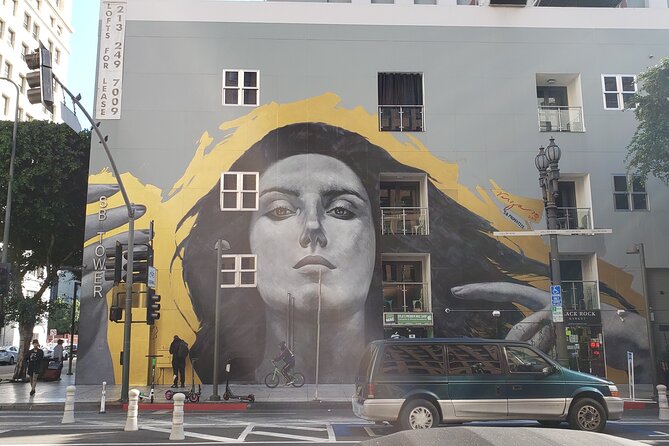
Reviewed · DOWNTOWN LOS ANGELES TOURS
The History and Architecture of Downtown Los Angeles
Downtown Los Angeles comes into focus when you ride Angels Flight, trace the rise of Bunker Hill, and walk through the streets where the city began with only 44 people. Chris connects grand buildings, courtrooms, film locations, Japanese American history, and old commercial blocks into one clear story.
I like the mix of architecture and local food, especially the mochi stop at 1903 Fugetsu-Do in Little Tokyo. I also like that Chris is the tour creator and leads the experience himself, rather than handing you off to a guide with a script. The main drawback is simple: this is a roughly five-mile walk over three hours, with slight slopes, heat, and limited restroom opportunities.
Key points to know before you book
- Angels Flight begins the story: Ride the 1901 funicular from the lower part of Hill Street, with your ticket covered.
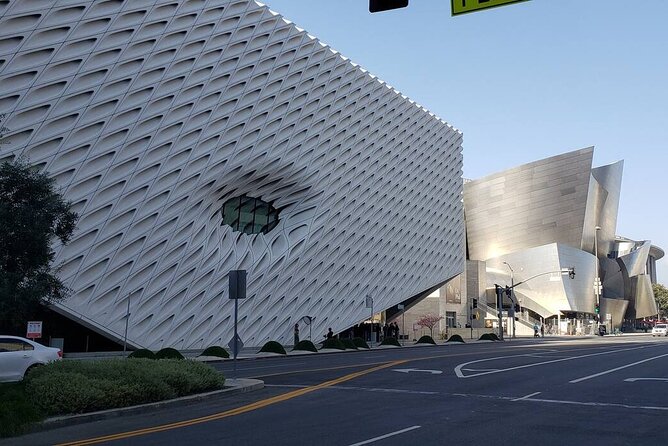
- Architecture is the main event: See the Walt Disney Concert Hall, The Broad, MOCA, the Music Center, City Hall, the Bradbury Building, and more.
- Little Tokyo includes a real food stop: Sample mochi from Fugetsu-Do, a confectionery founded in 1903.
- Movies and television are part of the route: Learn about locations connected with Bosch, La La Land, Blade Runner, Batman, and other productions.
- The three-hour walk requires stamina: Wear good shoes, bring water, and use the restroom before meeting the guide.
- The $39 price covers useful extras: Your guide, the mochi sample, and the Angels Flight ticket are included.
Start on Hill Street with a ride into Bunker Hill
Meet Chris at the lower part of Angels Flight Railway, at the stairs to the left of the train. This is a practical meeting point because the tour starts with the ride itself, not a long introductory talk on the sidewalk.
Angels Flight opened in 1901 and once helped people travel up and down Bunker Hill. Today, the short funicular ride is a piece of old Los Angeles that still feels wonderfully out of place among Downtown’s modern towers. Your ticket is included, so you do not need to work out the fare before starting.
The ride also gives the tour a useful shape. You are not simply walking from one attraction to another. You are moving from the old street level toward Bunker Hill, then learning why the hill mattered, who lived there, and how redevelopment changed it.
Film fans may recognize Angels Flight from Bosch and La La Land. Chris also connects the railway to the wider screen history of Downtown, which helps you notice how often Los Angeles uses its own streets as movie sets.
More Downtown LA tours in Los Angeles:
- Downtown Los Angeles Food Tour
★ 5.0 · 501 reviews - Old and New Downtown Los Angeles Walking Tour
★ 5.0 · 222 reviews - Culture and Arts Tour of Downtown LA with Angels Flight Ticket
★ 5.0 · 142 reviews
Bunker Hill puts modern architecture in context
At the top, the route moves through Bunker Hill and past some of Downtown’s most important cultural buildings. This is where the tour is particularly useful for anyone who likes architecture but does not want a dry lecture filled with dates and architects’ names.
You see the Museum of Contemporary Art, The Broad, the Walt Disney Concert Hall, and the Music Center. The stops are mainly exterior visits, photo opportunities, and guided explanations, rather than full museum tours. Plan to return separately if you want to go inside the galleries or attend a performance.
The Walt Disney Concert Hall gets about 15 minutes, enough time to understand its design and place in Los Angeles. Chris explains the development of the building and the work of Frank Gehry. You also encounter buildings by other Pritzker Prize winning architects, including Arata Isozaki.
I like this section because it shows several design ideas in a compact area. The point is not only that the buildings look striking. You learn how the city gathered museums, concert spaces, and public institutions on Bunker Hill, creating a new cultural center above the older neighborhood.
The Broad gets a shorter stop, as does MOCA. That is fine if your goal is orientation. It is less satisfying if you expect time inside each museum, so set your expectations correctly. This is a walking tour of Downtown’s architecture and story, not a museum admission package.
City Hall connects civic power with movie history
The route continues into the Civic Center, where Los Angeles City Hall becomes the main landmark. The building is famous on screen, appearing in Batman, Superman, War of the Worlds, The Lincoln Lawyer, Rookie, Dragnet, and other productions.
Chris uses those appearances as an entry point, but the building is not treated as a movie prop. You learn why City Hall matters to the city itself and how the Civic Center developed around government and public life.
This part also covers the courthouses and locations linked to major criminal and civil cases. Chris points out where O.J. Simpson, the Night Stalker, Bugsy Siegel, and Charles Manson went to court. That gives you a more grounded view of Los Angeles than the usual celebrity-home tour. The focus is on places where public events unfolded, not on gossip.
Expect about 25 minutes in the Civic Center area. Since the route passes by important buildings rather than promising courtroom entry, you should not expect to go inside and sit in on proceedings. The value comes from seeing the setting and hearing how it fits into the city’s story.
Little Tokyo adds food, memory, and a slower pace
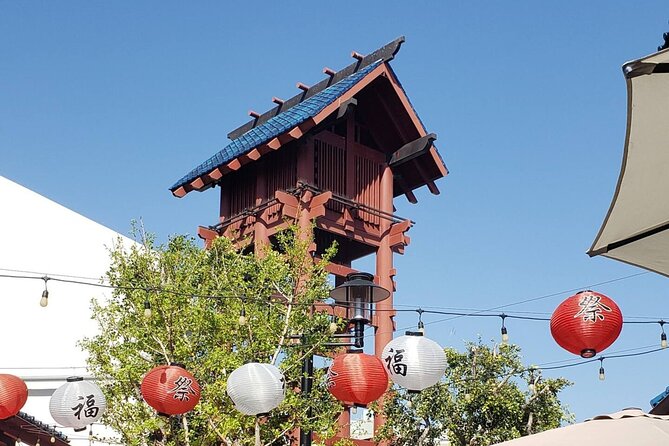
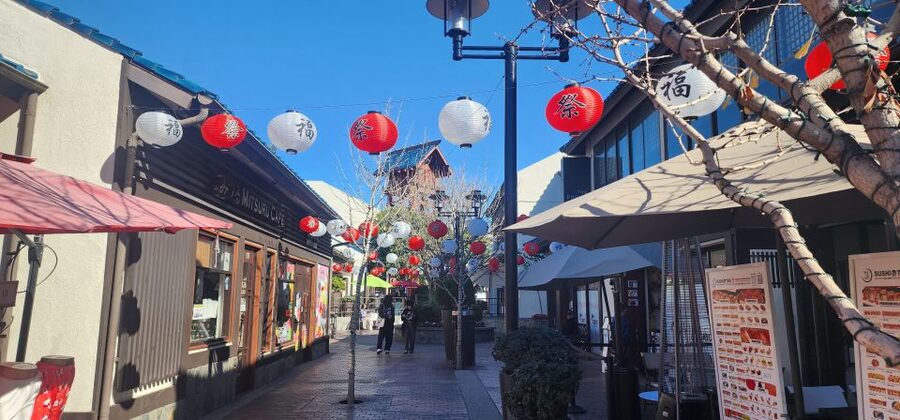
Little Tokyo is one of the tour’s best changes of rhythm. After the large civic and cultural buildings, the route moves into a district with shops, restaurants, plazas, and a more personal neighborhood story.
The area has experienced major changes and difficult periods. Chris explains those ups and downs while walking through Japanese Village Plaza and along Astronaut Ellison S. Onizuka Street. The tour also passes the historic surroundings near Fugetsu-Do and Vibiana.
The food stop is at Fugetsu-Do Bakery Shop, a confectionery established in 1903. You receive a mochi sample, included in the price. It is a small detail, but it makes the history easier to remember. You are not just hearing about an old business. You are tasting something from it.
I would allow yourself extra time in Little Tokyo after the tour if you enjoy Japanese food, sweets, or small shops. The planned stop is only about 10 minutes, so it is enough for a sample, not a full meal or shopping session. Chris also offers food recommendations that can help you return later.
The route includes about 20 minutes around Japanese Village Plaza and another stop along Astronaut Ellison S. Onizuka Street. You see the district as part of Downtown’s past and present, rather than as a quick restaurant break.
More history tours in Los Angeles:
- Natural History Museum of Los Angeles County Admission
★ 4.5 · 111 reviews - The History and Architecture of Downtown Los Angeles
★ 5.0 · 94 reviews - Downtown Los Angeles History and Architecture Walking Tour
★ 5.0 · 93 reviews - Malibu: Celebrity Homes, Beaches & History Tour
★ 4.7 · 86 reviews
The Historic Core brings the old city back into view
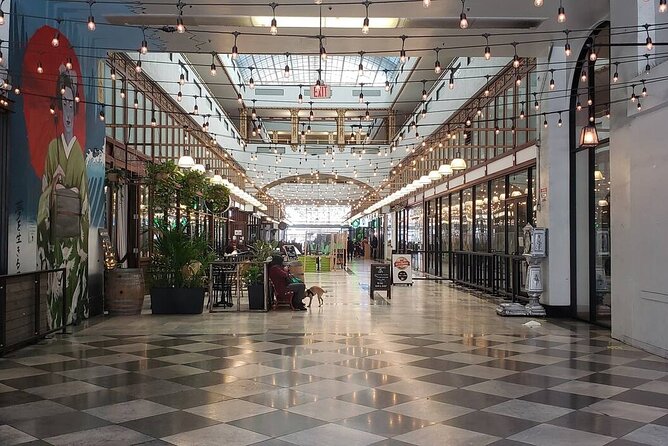
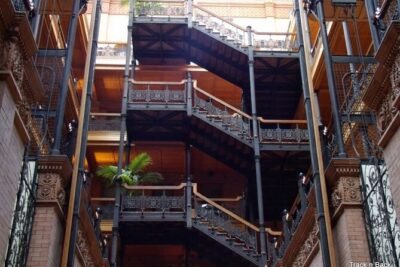
The Historic Core supplies the tour’s most dramatic interiors. The Bradbury Building feels unlike the polished cultural buildings on Bunker Hill. Its interior details point to an older Los Angeles, and its role in Blade Runner gives it a strong science-fiction connection.
The building is a particularly good stop for film fans, but you do not need to know the movie to appreciate it. Chris explains what makes the structure important and why it has worked so well on screen. The scheduled visit lasts about 10 minutes, so you get a focused look rather than a long architectural seminar.
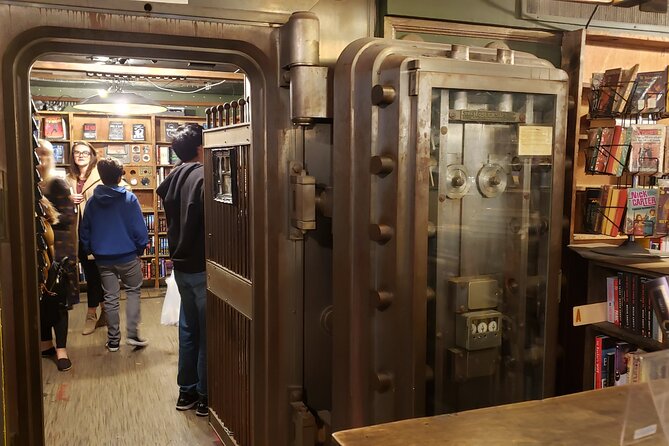
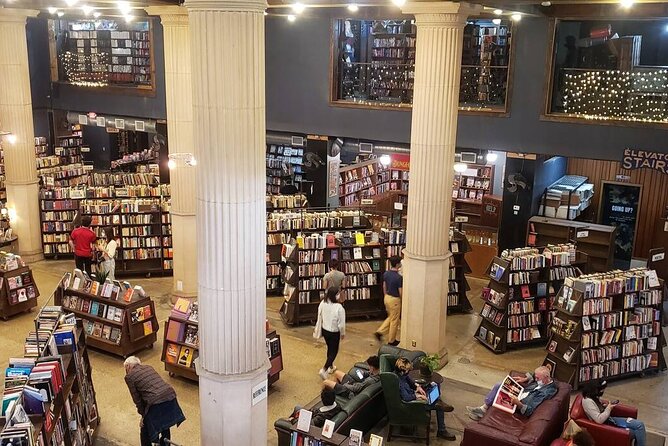
The Last Bookstore is another worthwhile stop. It occupies a 1915 bank and sells new and used books. The space itself is part of the attraction, with the old building giving the store a stronger sense of place than a standard modern shop.
The visit is scheduled for about 10 minutes. That is enough to look around and understand why the store belongs on a Downtown walking route, but book lovers may want to return with more time. If you are trying to browse shelves, shop for gifts, and take photos, you will need a separate visit.
The route also includes Biddy Mason Memorial Park, a small but meaningful historical stop. Chris uses it to add people and lived experience to the building-focused story. That balance matters. Downtown is not only about celebrated architects and movie backdrops.
Grand Central Market is a useful finish
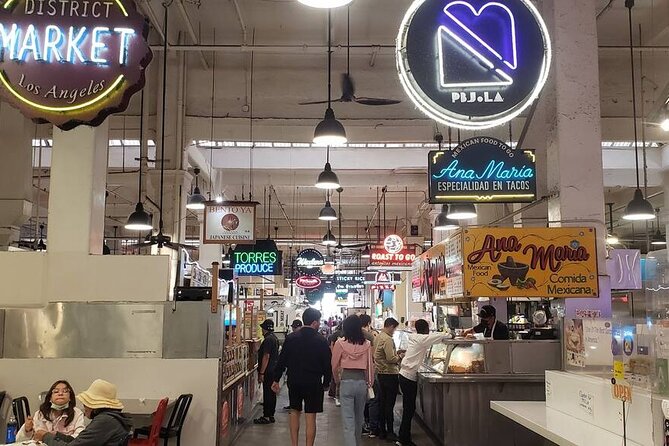
The tour ends at Grand Central Market before returning to the meeting point at 341 South Hill Street. You get about 10 minutes in the market, with Chris offering recommendations for where to eat.
This is helpful because Grand Central Market can feel overwhelming when you first arrive. A short orientation helps you decide what to investigate later, rather than wasting your meal break walking from stall to stall.
Drinks and meals are not included, so budget extra if you want to eat at the market. The tour’s mochi sample is the only stated food tasting. I would treat the final market stop as a chance to gather practical suggestions, then return on your own for a proper meal.
The listed route returns to the starting area, making it easier to continue exploring Downtown afterward. You could head back toward Little Tokyo, visit a museum, browse The Last Bookstore, or eat at Grand Central Market.
What Chris adds to the experience
Chris has led tours for KTLA, Spectrum News1, and NHK Japan, and he also creates other Los Angeles experiences. More important for this tour, you are promised Chris himself as the guide.
That matters because the experience depends on explanation. A route through Downtown can become a string of impressive facades without someone to connect the pieces. Chris links architecture, crime history, literature, television, film, and neighborhood change.
His references include the noir writing of Raymond Chandler and Michael Connelly’s Bosch stories. If you enjoy Los Angeles crime fiction, those connections should add another layer to the walk. If you do not know the books, the references still help explain why Downtown often feels like a character in its own right.
The strongest praise in the available feedback centers on Chris’s command of the subject, his humor, patience, and ability to answer questions. One particularly useful detail is that he adjusts the route when the group is small. That does not guarantee a private tour, but it suggests you may get a more tailored experience when numbers are low.
He has also handled difficult conditions thoughtfully. On a very hot day, he made a point of using shade and reminding the group to stay hydrated. Still, you should prepare for the weather yourself. Bring water, wear comfortable shoes, and consider sun protection.
Timing, cost, and physical demands
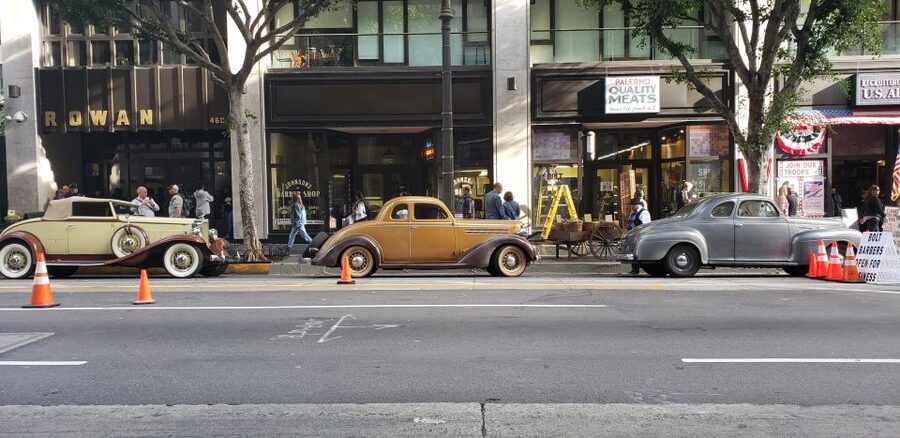
The price is $39 per person for three hours. That is a fair deal if you want a guided introduction to several parts of Downtown rather than paying separate admission fees at museums and attractions.
The price includes the guide, the Angels Flight ticket, and a mochi sample. It does not include parking, drinks, meals, or museum admissions. Parking near Grand Central Market and in nearby lots generally costs about $10 to $20 per day.
The route covers a few miles, with one detailed account putting the walk at about five miles. You will handle slight slopes and spend much of the time on your feet. The experience is not suitable for people with mobility impairments, and it is not a good choice if you want a slow, short stroll.
Use the restroom before the tour. There are restrooms across from the meeting point in Grand Central Market, but only a couple of opportunities once the walk gets underway.
English is the tour language. Free cancellation is available up to 24 hours before the start, and you can reserve now and pay later. Starting times vary, so check availability for your date.
Who will get the most from this walk
I would recommend this tour to you if you want to understand how Downtown fits together. It works especially well for first-time visitors who want more than Hollywood, for architecture fans, and for people who enjoy film locations with a real city story behind them.
It also suits anyone staying in Downtown for several days. The route helps you get your bearings, then gives you ideas for where to return. The public transportation access is another plus, with the meeting point easy to reach by bus and Metro according to the supplied directions.
Families can enjoy the mix of train ride, buildings, movies, and mochi, but the five-mile distance may be too much for young children. The same is true for anyone who prefers frequent seated breaks.
You should choose another activity if you want extensive indoor sightseeing, a restaurant-focused food tour, or a private vehicle. This is a walking experience through public streets, with short stops and lots of spoken context.
Should you book it?
Book this tour if you want the story behind Downtown Los Angeles, not just a checklist of famous buildings. The combination of Angels Flight, Bunker Hill architecture, City Hall, Little Tokyo, the Bradbury Building, The Last Bookstore, and Grand Central Market gives you a strong three-hour introduction.
The best value comes from Chris’s explanations and the way he links places that might otherwise feel unrelated. Just bring water, wear shoes suited to a long walk, and remember that the museums and market require extra time or money beyond the tour.
FAQ
Where does the tour meet?
Meet at the lower part of Angels Flight at 341 South Hill Street. Look for the area with stairs to the left of the train.
How long is the tour?
The tour lasts three hours and covers several miles, with one account describing the walk as about five miles.
Is the Angels Flight ticket included?
Yes. The Angels Flight ride is included in the tour price.
Is food included?
A mochi sample at Fugetsu-Do Bakery Shop in Little Tokyo is included. Drinks and meals, including food from Grand Central Market, are not included.
What should I bring?
Bring comfortable shoes, water, and a camera. Use the restroom before the tour because there are only a couple of restroom opportunities once the walk begins.
Is the tour suitable for people with mobility impairments?
No. The route is a long walking tour with a few slight slopes and is not suitable for people with mobility impairments.
Just added around Los Angeles
- Photo Tour of Los Angeles for Social Media★ 5.0 · 11 reviews
- Pacific Coast Highway: Smartphone Audio Tour, LA to Santa Maria★ 4.0 · 13 reviews
- Pasadena Puzzle Adventure: Stop the Bomb!★ 3.5 · 5 reviews
- Outdoor Escape Room in LA – Little Tokyo★ 5.0 · 7 reviews
- 3.5-Hour LA Story Tour: Our Most Popular Los Angeles Tour!★ 5.0 · 4 reviews
- 2 Day Beginner Surf Adventure★ 5.0 · 26 reviews
- Getty Center Tours for KIDS and FAMILIES!★ 5.0 · 5 reviews
- Private 3-Hour Hollywood to Beverly Hills Tour★ 5.0 · 5 reviews
Downtown Los Angeles Tours, compared.

The History and Architecture of Downtown Los Angeles
Read our review →
Downtown Los Angeles History and Architecture Walking Tour
Read our review →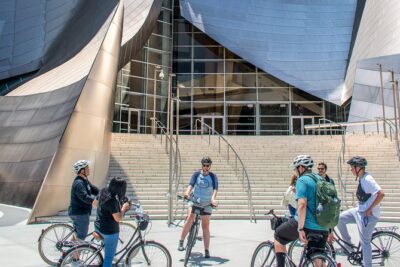
Browse the lists this tour appears in