
Reviewed · WARNER BROS STUDIO TOURS
Oscar History and Film Set Studio Tour at the Biltmore Hotel
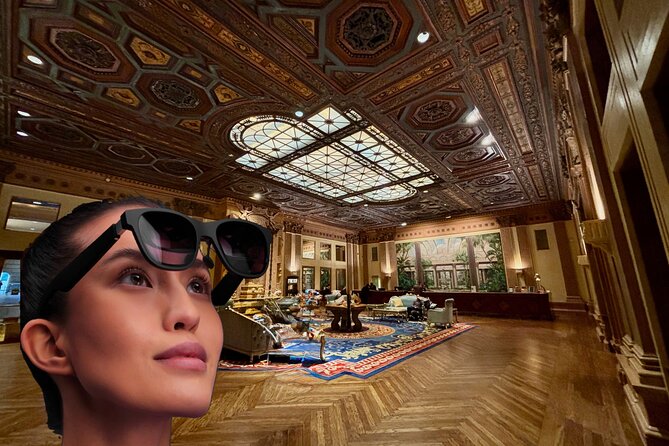
The clever idea here is simple: you walk through the Biltmore Hotel while smartglasses place old photos, Oscar footage, and movie scenes directly over the rooms in front of you. It turns a grand hotel visit into a small time machine, with the past appearing in the same spaces you are seeing today.
I like the sharp link between architecture and film, especially when you stand in a room from Ghostbusters or see footage from the 1960 Democratic National Convention. I also like the small group limit of 10, which gives Eloi or Mark room to guide you rather than send you through the hotel in a crowd. The main drawback is the short one-hour schedule. You will see several important rooms, but you will not have time for a slow, detailed architectural tour.
Key points
- Smartglasses bring the past into view: Historic photos, film clips, and event footage appear while you are standing in the original locations.
- The Biltmore links Hollywood and politics: The tour covers the first Academy Awards and the 1960 convention where JFK was nominated.
- Movie locations include Ghostbusters, Chinatown, Fight Club, and Oppenheimer: Pop culture fans get plenty to recognize.
- The route includes the Music Room, Galleria, Crystal Ballroom, Gold Room, and Rendezvous Court: Each space has a different architectural or historical angle.
- Small groups keep the experience personal: The maximum is 10 people, and the guide stays with you throughout.
- The price is modest for a technology-based tour: At $25, you are paying for a focused one-hour experience, not a long hotel visit.
Why the Biltmore works so well as a film tour
The Millennium Biltmore Hotel is not just a pretty stop in Downtown Los Angeles. Its rooms connect several parts of the city’s story: early Hollywood, the Academy Awards, Prohibition, major political events, and modern music videos.
That range gives the tour a useful rhythm. You are not only looking at painted ceilings and polished rooms. You are also seeing how one place changed meaning over time. A ballroom can be an elegant social space, a political stage, and a movie set, depending on the decade.
The smartglasses make that connection easier to grasp. Instead of hearing that a scene was filmed in a particular room, you can watch the scene while standing there. That small shift matters. You can compare the camera’s view with the real space, notice what has changed, and understand why filmmakers chose the location.
Eloi created the experience, and both Eloi and Mark are named as guides for the tour. The guide uses the glasses to send images and video to you during the walk. You also use your phone as part of the experience, so this is not a traditional lecture with a guide speaking while you simply follow along.
More studio tours and tickets in Los Angeles:
- Warner Bros. Studio Tour Hollywood
★ 4.5 · 5,246 reviews - Warner Bros. Studio Tour & Celebrity Homes Tour Package
★ 3.5 · 225 reviews - Los Angeles: Warner Bros Studio Hollywood & Bus Tour Package
★ 3.6 · 150 reviews
Entering the Music Room and Galleria
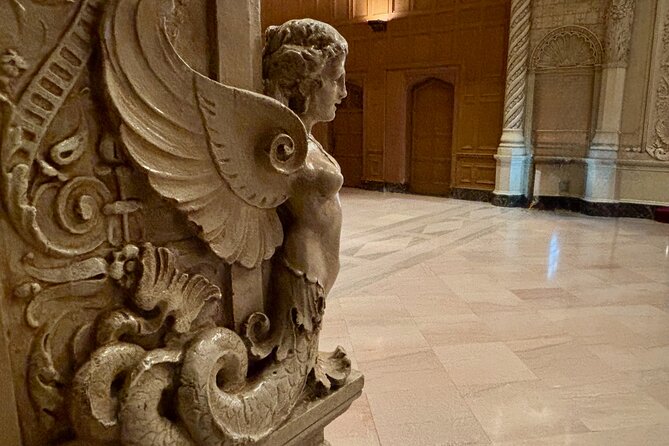
The route begins at the Biltmore, at 507 South Olive Street. The first major stop is the Music Room, where an intricate ceiling filled with cherubs gives you an immediate sense of the hotel’s original ambition.
The room’s Italian Renaissance influence is part of the appeal. You get a strong architectural view with your own eyes, then the visual material adds another layer. Historic images can show how the space looked in earlier periods, while the guide explains its place in the hotel’s story.
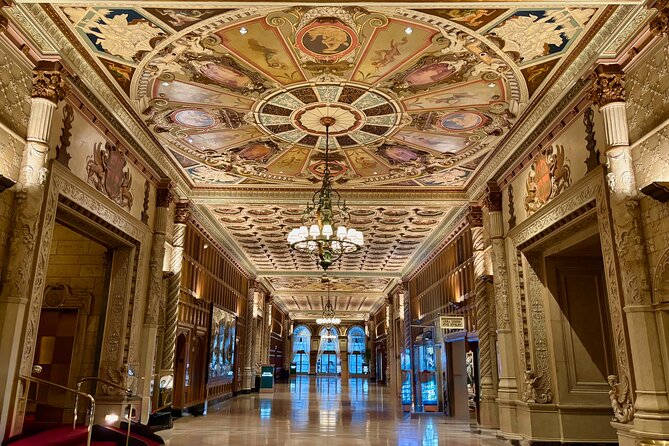
Next comes the Galleria, a long, ornate passage painted by Giovanni Smeraldi. This is a good setting for augmented images because corridors can be hard to picture across different periods. The old photographs and overlays help you see the space not just as decoration, but as part of a working hotel that has passed through several eras.
I would pay attention to the ceilings and wall details here, even if you are mainly interested in films. The route moves quickly, and the visual material can grab your attention. You will get more from the stop if you take a moment to look at the real room before watching the clip or image on the glasses.
The Historic Corridor and the first Academy Awards
The Historic Corridor is one of the tour’s key stops because the first Academy Awards were held at the Biltmore. That gives the Oscar theme a real physical setting instead of treating it as a general Hollywood story.
For film fans, this is likely the most important historical point of the walk. The Academy Awards are now associated with huge modern venues and televised spectacle, but here the event is tied to an early hotel interior in Downtown Los Angeles. The smartglasses help bridge that gap between the room you see now and the ceremony’s earlier setting.
The tour also uses footage and photographs to show how Los Angeles looked during the 1920s and the silent-film era. You are not only getting celebrity trivia. You are seeing the city at a time when the film business was still taking shape.
The limitation is time. The tour lasts about one hour, and the Biltmore contains more material than can fit into that period. If you want a long account of the Academy Awards, film production, or the hotel’s architecture, this will feel selective. Its strength is choosing vivid examples and placing them in front of you.
The Olive Street entrance and Chinatown
The VIP Olive Street Entrance has a film connection to Chinatown. This is a useful stop for anyone who likes location shooting, because the attraction is not a recreated set. You are looking at the real entrance and then seeing how cinema used it.
The guide’s visuals can show the contrast between the actual hotel and the way a director frames it. That helps you notice something many film tours skip: a familiar place can look completely different once lighting, camera angle, costumes, and editing take over.
The Olive Street entrance also adds variety to the route. The tour is not confined to ballrooms and decorative interiors. You move through different parts of the hotel and see how filmmakers used practical spaces.
If you have not seen Chinatown, this stop may carry less weight, but the broader idea still works. The glasses connect a physical location to its screen identity, and that is the central reason to choose this tour over a standard hotel history talk.
More history tours in Los Angeles:
- Natural History Museum of Los Angeles County Admission
★ 4.5 · 111 reviews - The History and Architecture of Downtown Los Angeles
★ 5.0 · 94 reviews - Downtown Los Angeles History and Architecture Walking Tour
★ 5.0 · 93 reviews - Malibu: Celebrity Homes, Beaches & History Tour
★ 4.7 · 86 reviews
The Crystal Ballroom and JFK’s nomination
The Crystal Ballroom is one of the grandest points on the route. Its elaborate decoration makes it easy to understand why the Biltmore has hosted major galas and formal events.
The room also carries political history. The tour can show footage of the 1960 Democratic National Convention, including JFK’s nomination for president, while you are in the same ballroom. That is one of the strongest moments because the footage is tied to a specific floor, ceiling, and room rather than presented as a distant historical clip.
I like this pairing of entertainment and politics. It keeps the tour from becoming only a list of movie titles. The Biltmore’s story includes public events that mattered far beyond Hollywood, and the ballroom makes that scale clear.
The room may also be the place where you feel the limits of a one-hour route most sharply. There is enough material here for a full talk by itself. You should expect a brisk explanation and selected footage, not a long examination of the convention.
The Gold Room and Prohibition-era secrets
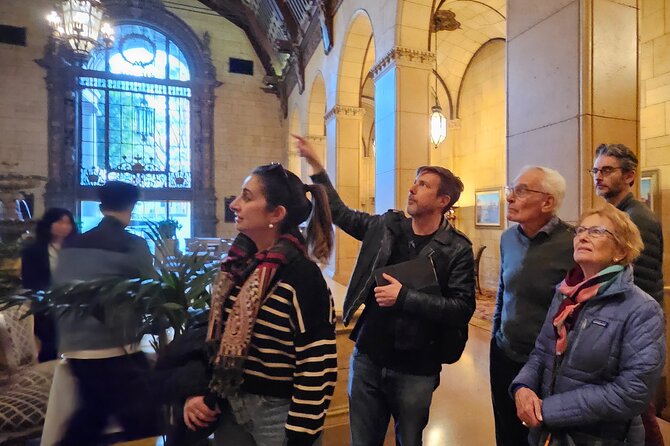
The Gold Room brings a darker and more playful note to the walk. It is linked to the hotel’s Prohibition-era speakeasy history, which gives the tour a story of secrecy beneath the polished surface.
This is where the Biltmore becomes more than a stage for famous people. The room suggests how hotels could serve different purposes at once: luxury accommodation in public, and discreet activity behind closed doors.
The smartglasses are well suited to this part of the tour. A historic photograph, visual overlay, or period footage can suggest what the room felt like in another era without requiring a rebuilt set. You remain in the present-day hotel while getting clues about its earlier life.
Keep your expectations sensible. The experience provides an introduction to the Prohibition story rather than a long investigation. The appeal comes from the setting and the presentation, not from a lengthy collection of hidden rooms or physical props.
The film connections: from Ghostbusters to Taylor Swift
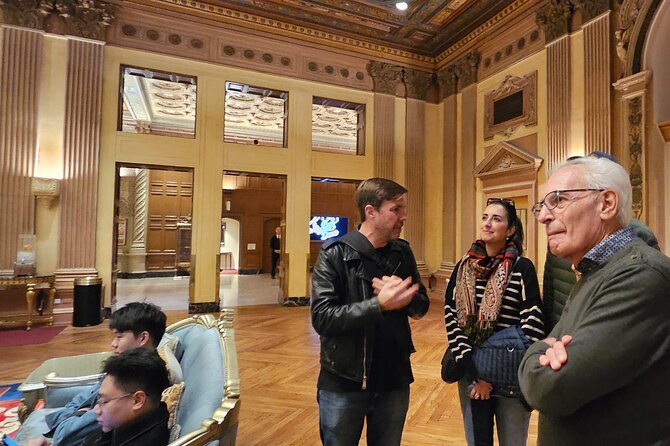
The film material is broad. The tour includes scenes connected with Ghostbusters, Beverly Hills Cop, Fight Club, Chinatown, and Oppenheimer. It also covers music videos by Taylor Swift and Jisoo.
That spread helps the tour work for different ages and interests. You might care most about classic Hollywood, modern blockbusters, political history, or pop music. The Biltmore gives the guide a common place to connect all of those subjects.
The Ghostbusters section is likely to be especially effective because you can watch the exact scene while standing in the room where it was filmed. That is more useful than simply hearing a movie title and being shown a lobby from a distance.
The tour does not promise a visit to every location used in every production. Instead, it gives you a concentrated look at selected spaces inside the hotel. If you want a broad Los Angeles movie tour covering many neighborhoods, this is too focused. If you want to understand how one building can appear in many productions, the focus is a strength.
What the smartglasses add, and what they require
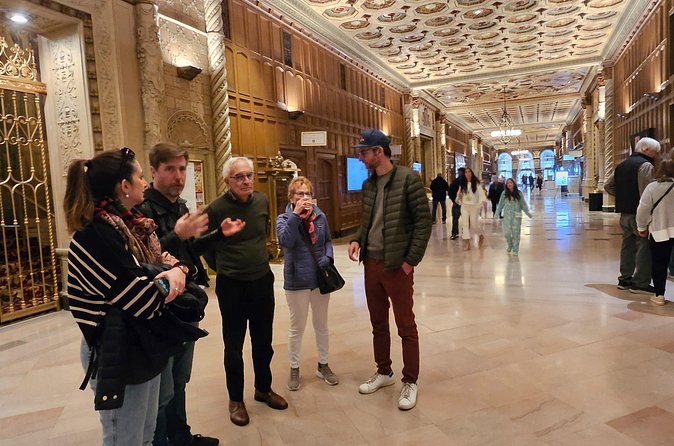
This is an augmented reality tour, so the glasses are central rather than decorative. They place photos, footage, and other visual material into your view as you walk.
That can make history much easier to follow. You do not have to imagine the hotel in the 1920s from a verbal description alone. You can see old views while standing in the current rooms, then compare the two.
The system also makes the tour more interactive. The guide sends material to the glasses at different points, so the experience changes from room to room. Eloi’s approach has been described as personalized, with the guide helping you use the equipment and follow the story.
There is a practical tradeoff. You are managing the hotel itself, the guide, the glasses, and your phone. Some people will enjoy that extra layer; others may prefer to look closely at the architecture without a device in front of their eyes.
For the best result, use the technology as a supplement. Look first at the room. Then watch the clip. That way you get both the building and the screen connection.
Is one hour enough?
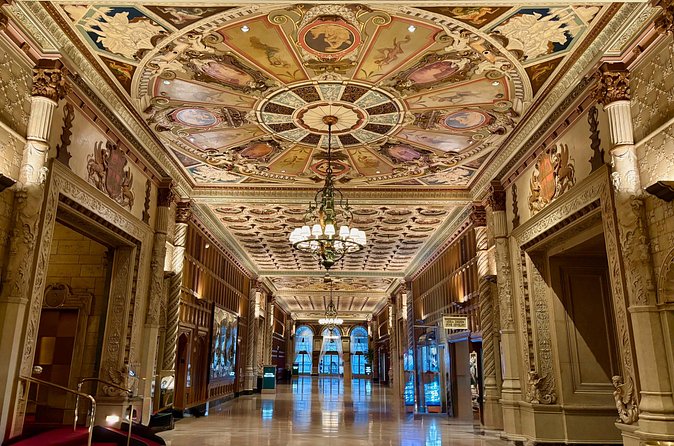
One hour is enough for a focused introduction. The route covers the major spaces listed for the experience: the Music Room, Galleria, Historic Corridor, Olive Street entrance, Crystal Ballroom, Gold Room, and Rendezvous Court.
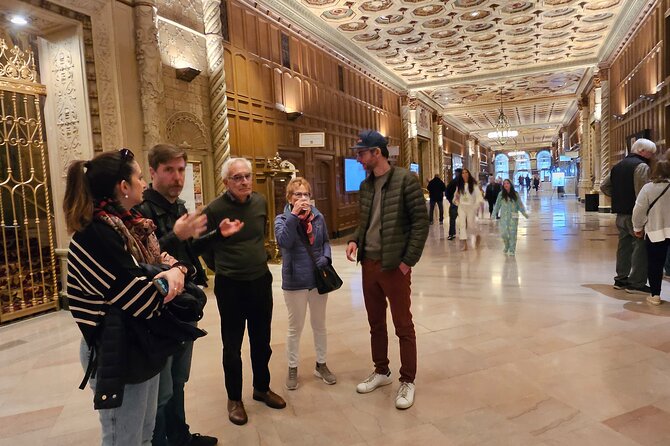
It is not enough for a slow hotel exploration. You should expect the guide to keep the group moving so each stop receives attention. The small maximum of 10 helps, since a compact group can gather around the guide and move through the route without the drag of a large crowd.
The ending at the Rendezvous Court provides a strong visual finish. Its Moorish-inspired design gives the final stop a different look from the Italian Renaissance details of the Music Room and the ornate corridors.
I would choose this tour when you want a polished, well-defined activity in Downtown Los Angeles. I would not choose it if your main goal is to spend an afternoon wandering every public space in the hotel.
Price, timing, and who should book
The cost is $25 per person. For one hour, that is a fair price if you care about film locations, hotel architecture, or Los Angeles history. You are not paying for a long guided visit, but you are getting a guide, smartglasses, visual media, and access to a carefully selected route.
The value comes from the presentation. A standard walk through a hotel may show you the same ceilings and corridors, but it would not necessarily place Oscar footage, JFK’s nomination, or a Ghostbusters scene in front of you at the exact location.
The tour is offered in English and accepts mobile tickets. The hotel is near public transportation, which makes it practical for a Downtown Los Angeles day. It begins and ends at the Millennium Biltmore Historic Hotel, so you can plan another DTLA stop before or after it.
The experience is a good match for:
- Film and television fans who want to see real shooting locations
- People interested in the early Academy Awards
- Visitors curious about Downtown Los Angeles history
- Pop culture fans who recognize Ghostbusters, Beverly Hills Cop, Taylor Swift, or Jisoo
- Local residents who want a fresh way to look at a familiar building
- Families with different interests, since the visual format works across age groups
It may be less suitable for someone who dislikes wearable technology or wants a quiet architectural tour. The guide’s presentation and the visual overlays are the point, so you should choose another visit if you want a device-free experience.
You can cancel for a full refund up to 24 hours before the start time. Changes or cancellations made less than 24 hours ahead are not accepted for a refund, and the cut-off uses local time.
Should you book the Biltmore smartglasses tour?
I would book it if you want a compact, unusual way to connect Hollywood scenes with a real Los Angeles building. The strongest moments are the first Academy Awards setting, the JFK footage in the Crystal Ballroom, and watching a Ghostbusters scene in the room where it was filmed.
I would skip it only if you want a long architectural tour or a broad citywide film tour. At $25, the tour gives you a focused hour, a small group, a guide named Eloi or Mark, and a presentation style you will not get from simply walking through the lobby.
FAQ
Where does the tour begin?
The tour begins at the Millennium Biltmore Historic Hotel, 507 South Olive Street, Los Angeles, California 90013.
Where does the tour end?
The activity ends back at the meeting point at the Biltmore.
How long does the tour last?
The tour lasts approximately one hour.
How much does the tour cost?
The listed price is $25 per person.
What language is the tour offered in?
The tour is offered in English.
How many people can join the tour?
The maximum group size is 10 people.
What technology does the tour use?
You receive smartglasses that display historic photos, film clips, event footage, and other visual material during the walk. Your phone is also part of the experience.
Which Biltmore spaces does the tour visit?
The route includes the Music Room, Galleria, Historic Corridor, VIP Olive Street Entrance, Crystal Ballroom, Gold Room, and Rendezvous Court.
Which films and music videos are connected to the tour?
The experience includes connections to Ghostbusters, Beverly Hills Cop, Fight Club, Chinatown, Oppenheimer, and music videos by Taylor Swift and Jisoo.
Can I cancel for a refund?
Yes. You can cancel at least 24 hours before the experience start time for a full refund. Cancellations or changes made less than 24 hours before the start time are not accepted for a refund.
Just added around Los Angeles
- Photo Tour of Los Angeles for Social Media★ 5.0 · 11 reviews
- Pacific Coast Highway: Smartphone Audio Tour, LA to Santa Maria★ 4.0 · 13 reviews
- Pasadena Puzzle Adventure: Stop the Bomb!★ 3.5 · 5 reviews
- Outdoor Escape Room in LA – Little Tokyo★ 5.0 · 7 reviews
- 3.5-Hour LA Story Tour: Our Most Popular Los Angeles Tour!★ 5.0 · 4 reviews
- 2 Day Beginner Surf Adventure★ 5.0 · 26 reviews
- Getty Center Tours for KIDS and FAMILIES!★ 5.0 · 5 reviews
- Private 3-Hour Hollywood to Beverly Hills Tour★ 5.0 · 5 reviews
Warner Bros Studio Tours, compared.

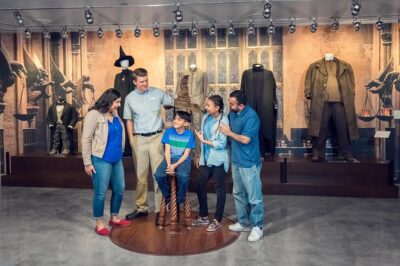
Warner Bros. Studio Tour & Celebrity Homes Tour Package
Read our review →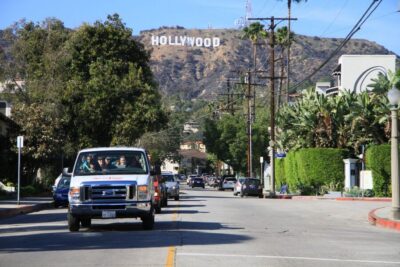
Warner Bros Studio Hollywood & Bus Tour Package
Read our review →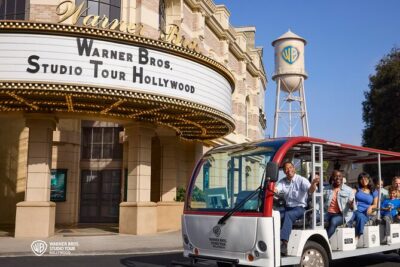
Warner Bros. Studio Tour & Hop-on Hop-off Bus Tour Package
Read our review →Browse the lists this tour appears in