
Reviewed · DOWNTOWN LOS ANGELES TOURS
Best of Downtown Los Angeles by Luxury E-Bike
Los Angeles makes far more sense from a bicycle than from behind a bus window. This small-group e-bike tour links the LA River, gritty back streets, arts districts, historic plazas, markets, and major bridges in one long ride, covering about 25 miles with electric assistance.
I like the maximum group size of six, which lets guide Gavin keep the pace personal and point out details you would miss in a vehicle. I also like the mix of polished sights and everyday LA life, from Union Station and Olvera Street to Santee Alley and a pupusa or taco stop. The main consideration is the price: at $300 per person, this is a premium half-day outing, and you still pay separately for lunch.
Key points to know
- About 25 miles by e-bike: Electric assistance makes a long city ride manageable, but you still need moderate fitness.
- A true cross-section of Los Angeles: The route connects Atwater Village, the LA River, Downtown, Chinatown, historic plazas, and Elysian Park.
- A tiny group: The tour is limited to six people, a useful advantage in traffic and on narrow paths.
- Local food is part of the plan: Coffee, snacks, and street food help break up the ride, but lunch is not included.
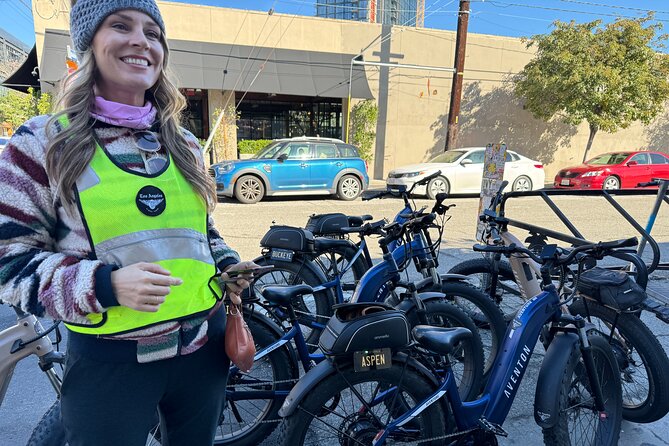
- Luxury bikes with names: You receive a fitted e-bike, safety gear, bottled water, and snacks at the Atwater Village bike bungalow.
- A guide-led city ride: Gavin is the named guide in the tour information, and the company is E Bike Tours LA.
Why an e-bike is the right way to see Los Angeles
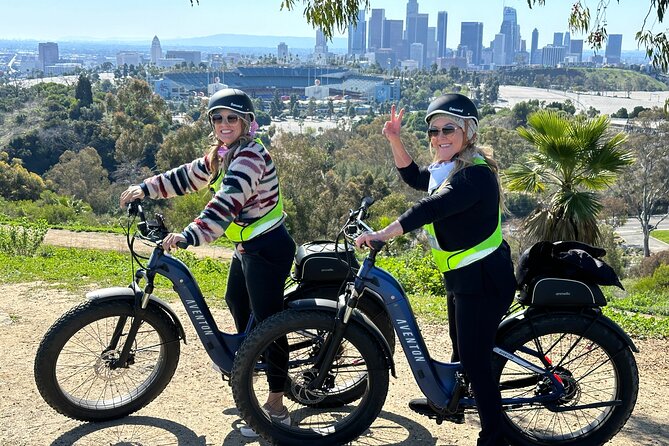
Los Angeles is too spread out for a satisfying walking tour, yet a bus can leave you staring at traffic and missing the spaces between famous sights. This ride takes the middle path. You move fast enough to cover a large area, but slowly enough to notice river bridges, murals, old warehouses, food stalls, and changing neighborhoods.
The electric motor matters. The route lasts about four to five hours and can reach roughly 25 miles. You will still pedal, steer, climb ramps, and ride through city streets, but the motor takes the sting out of longer stretches and hills. The operator asks for a moderate level of fitness, so this is not a sightseeing ride where you simply sit back.
The small group makes a real difference. Six people or fewer is easier to manage around traffic, bridges, tunnels, and busy market streets. It also gives you more chances to ask Gavin about the places you pass. One particularly useful detail from the company is that every bike has a name. That is a small touch, but it helps the equipment feel personal rather than rented and anonymous.
More Downtown LA tours in Los Angeles:
- Downtown Los Angeles Food Tour
★ 5.0 · 501 reviews - Old and New Downtown Los Angeles Walking Tour
★ 5.0 · 222 reviews - Culture and Arts Tour of Downtown LA with Angels Flight Ticket
★ 5.0 · 142 reviews
Starting in Atwater Village beside the LA River
You begin at the E Bike Tours LA office, a dedicated bike bungalow at 3306 Glendale Boulevard in Atwater Village. The neighborhood is known for its cafes and independent shops, and the meeting point is in an area described as easy to walk around.
The first 15 minutes are practical. You meet the guide, get fitted to your e-bike, receive safety gear, and learn how the bike works. Pay attention here. A good fit and a clear briefing will make the rest of the ride more comfortable, especially on a half-day route.
From Atwater Village, the group uses quiet residential streets before reaching the Los Angeles River. The car-free Red Car Pedestrian Bridge recalls the old Red Car rail trolleys that once crossed at this location. The guide also explains why the river matters: in an arid region, its water helped make settlement possible and shaped the city’s early growth.
Under the Hyperion Bridge, the city’s layers begin to pile up. The bridge is a Los Angeles Historic-Cultural Monument, and its design has a Disney connection. Walt Disney lived nearby in Los Feliz, created Mickey Mouse in his aunt and uncle’s garage, and later worked from a studio in Silver Lake. He was also a regular at Atwater Village’s Tam O’Shanter.
This is a good opening because it does not treat Los Angeles as a collection of movie locations only. You get water, transport, local neighborhoods, architecture, and entertainment history in one short stretch.
Following the river through Elysian Valley and Glassell Park
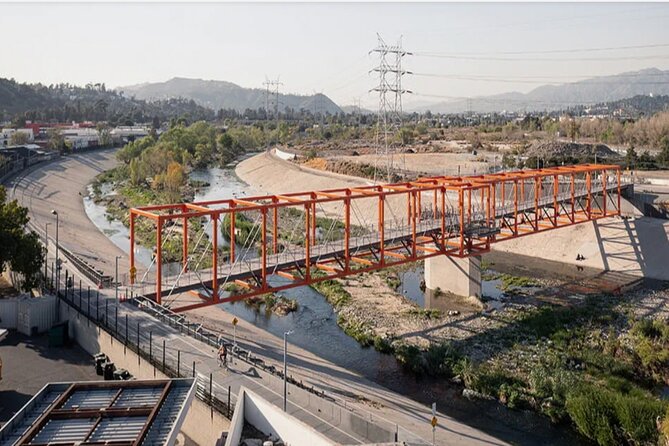
The ride continues through Elysian Valley, one of the more natural sections of the Los Angeles River. The Taylor Yard Bikeway and Pedestrian Bridge is bright orange and built only for people on foot or bicycles. Its open-frame design includes two viewing platforms with north and south views.
The bridge is part of the city’s wider River Revitalization Master Plan. It is intended to connect Elysian Valley and Cypress Park, with a future river park planned on the nearby Taylor Yard G2 parcel. You can see the city trying to turn a hard-edged flood channel into a more usable public corridor.
Next comes Glassell Park, where the route shifts away from postcard scenery. You weave through gritty back alleys and traffic tunnels, passing a backstreet pop-up flea market. This section is valuable because it shows ordinary, changing Los Angeles rather than only the cleaned-up version presented in visitor brochures.
You should also expect a few rough edges. Back alleys and city traffic are less predictable than a protected bike trail. The guide’s role matters here, and the small group makes it easier to stay together.
Bridges, stairs, and the Brewery Arts Complex
In Lincoln Heights, the ride includes a spiral staircase over Interstate 5. The tour description gives the moment a cheerful wheeee, but you should read it as a real physical feature, not a decorative stop. You will be moving a bicycle through a city built around freeways, and the route uses unusual connections to avoid simply following major roads.
The route then skirts Dogtown and reaches the Brewery Arts Complex. The former industrial site covers 16 acres and occupies 21 old warehouses. It includes studios, lofts, restaurants, galleries, and a former Edison power plant chimney dating to 1903.
The Brewery is one of the tour’s strongest stops because it explains how old industrial buildings can take on a second life. Artists working there include painters, sculptors, photographers, musicians, designers, architects, and people working in experimental media. More than 100 studios open during the twice-yearly Brewery Art Walk, though this ride does not promise entry to private studios or a special art event.
You also pass Stronghold Climbing Gym, located within the same 23-acre artist complex in a former Pabst brewing facility and the older California Edison Los Angeles Steam Power Plant. These industrial traces give the area a sturdy sense of place.
More bike and e-bike tours in Los Angeles:
- The Ultimate LA Tour: Full Day Sightseeing Tour On Electric Bike
★ 5.0 · 478 reviews - Small-Group Electric Bike Tour of Santa Monica and Venice
★ 5.0 · 458 reviews - Beverly Hills Tour: Movie Star Homes and LA Sightseeing by E-Bike
★ 5.0 · 191 reviews - Los Angeles: Hollywood Sign Electric Bike Tour
★ 5.0 · 166 reviews
Rolling over the 6th Street Viaduct
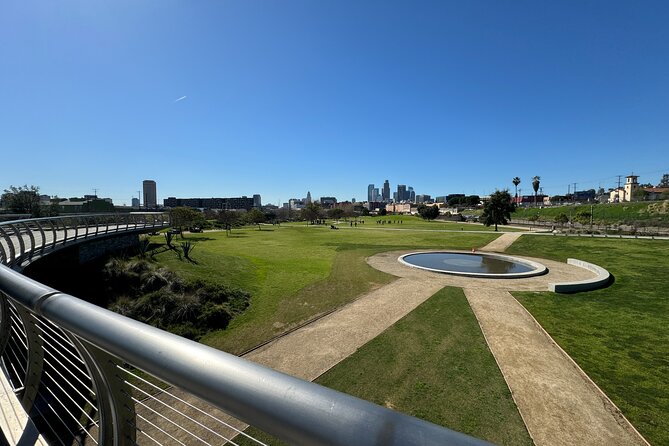
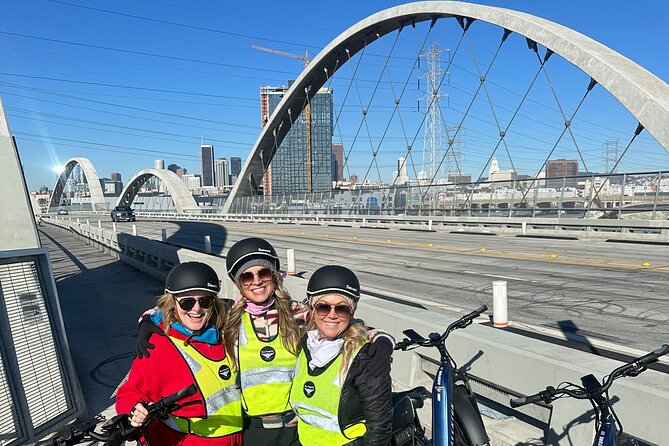
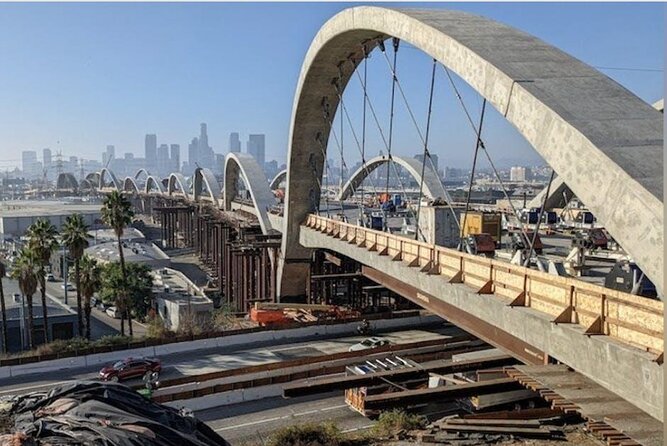
The new 6th Street Viaduct is one of the tour’s visual highlights. Its series of sculptural arches gives it the nickname Ribbon of Light, and its design pays respect to the 1932 bridge that appeared in many films, television programs, commercials, and music videos.
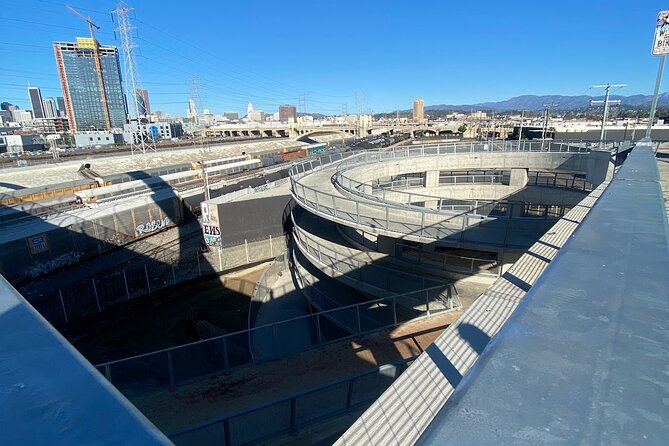
To reach the bridge, you ride up a large helical bicycle ramp. It is a memorable bit of urban engineering, and the height gives you a different view of the river and surrounding districts. A new 12-acre public park below includes recreation fields, restrooms, a cafe, public art, the river, and an arts plaza.
The stop is brief, listed at about 10 minutes, so do not expect a long architectural lecture or extended photography session. It works better as part of the larger ride, where the bridge becomes one dramatic link among many.
Coffee, the Arts District, and the Piñata District
After the viaduct, you get a coffee break at a Mateo Street cafe, with Blue Bottle Coffee named as the likely stop. The break lasts about 20 minutes. This is more important than it may sound. A long e-bike ride needs regular pauses, and coffee gives you a chance to drink water, reset, and chat with the guide.
The route then reaches ROW DTLA, a large mixed-use development at the meeting point of the Fashion District, Skid Row, and the Arts District. The site covers more than 30 acres and includes retail, restaurants, commercial workspace, and the 7th Street Produce Market, founded in 1917.
On Sundays, that market becomes Smorgasburg, a free food market. The tour does not say that the Sunday market is part of every departure, so treat it as a possible extra rather than a guarantee.
In the Piñata District, the food focus becomes more direct. You stop for street food, with pupusas and tacos suggested, and you might try tepache, a fermented pineapple drink, or pulque, a fermented agave drink. This is one of the most appealing parts of the route for anyone who wants to taste the city rather than simply photograph it.
Lunch is not included in the $300 price. The tour includes snacks and bottled water, but you should budget separately for anything you eat or drink at the coffee and food stops. That arrangement gives you choice, though it makes the final cost less fixed.
Fashion District bargains and the Federal Building murals
The LA Fashion District is described as the West Coast hub of the apparel industry. You then enter Santee Alley, a 150-plus retailer open-air corridor known for low-priced merchandise and knockoff fashion.
This is not a quiet historic lane. Expect a noisy, crowded shopping corridor filled with clothing, electronics, sunglasses, shoes, food, sequins, and household goods. Your bike experience here will be different from the river sections, and the guide will need to manage the group carefully.
Santee Alley is useful because it presents the commercial engine of Downtown in a direct way. You see how Los Angeles sells, imports, bargains, and moves goods. The tradeoff is that you have only about 20 minutes, so this is a quick look, not an afternoon of shopping.
Near the Federal Building, two 26-foot mosaic murals, Celebration of our Homeland and Recognition of All Foreign Lands, add a quieter art stop. They provide a welcome pause after the market’s noise and show how public art can shape a civic building.
El Pueblo, Olvera Street, and the oldest adobe home
The tour then reaches El Pueblo de Los Angeles Historical Monument, the birthplace of the settlement that grew into modern Los Angeles. In 1781, 44 settlers of Native American, African, and European heritage arrived from Mexico and founded the village.
Calle Olvera is the most colorful part of this historic district. The pedestrian marketplace sells huarache sandals, embroidered clothing, woven blankets, and other Mexican goods. Mariachi music and dancing may add to the atmosphere, though the tour does not promise a performance at every visit.
The Ávila Adobe, built in 1818 by Francisco Ávila, is the oldest standing residence in the city. A 15-minute stop gives you enough time to see the building and understand its place within the Los Angeles Plaza Historic District.
I like this portion because it pushes back against the idea that LA history begins with Hollywood or the freeway system. The city’s story reaches from Indigenous, African, and European settlers to Mexican civic life, rail transport, industry, and modern arts districts.
Union Station, Chinatown, and Elysian Park
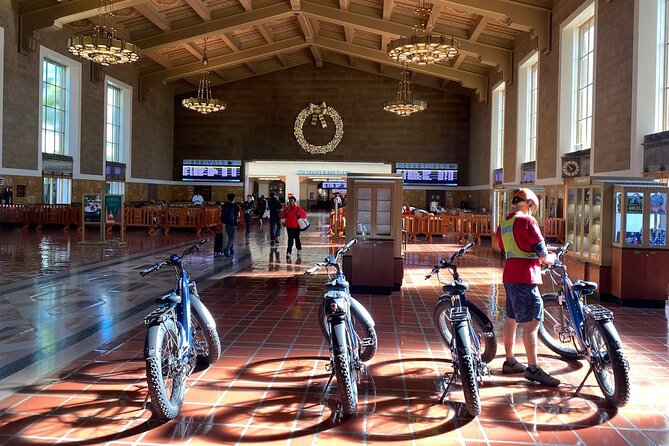
Union Station opened in 1939 and is widely regarded as the last of the great train stations. Its art deco design gives the group a striking interior and exterior stop, while its film history includes Blade Runner, Catch Me If You Can, Pearl Harbor, The Dark Knight, Speed, and Euphoria.
The tour allows about 10 minutes here. That is enough for an introduction and a look around, but not a full station architecture tour.
In Chinatown, golden dragons mark the gateway to the neighborhood. Shops and street vendors along Broadway sell produce, hats, toys, housewares, and other goods. You also pass murals, galleries, a statue of Bruce Lee, and the Dragon Chasing Pearl mural.
The original Chinatown was demolished to make room for Union Station. The present New Chinatown opened in 1938 and includes shops, restaurants, galleries, and homes. That relocation story gives this stop real weight. It is not only a place for food and photos, but also a reminder that transportation projects can reshape communities.
Elysian Park brings a change of pace. Founded in 1886, it is the city’s oldest park and offers views toward Dodger Stadium, the San Gabriel Mountains, Los Angeles, and the Pacific Ocean. The stop is listed at 25 minutes, making it one of the better chances to slow down and take in the city’s scale.
Returning through Frogtown
The return route uses the Los Angeles River and the Red Car Bridge. You pass through Elysian Valley, also known as Frogtown, a creative area with bike paths, art studios, and restaurants.
This final section brings the day back to its starting idea: seeing LA from the river corridor. Instead of ending in a parking lot or at a distant attraction, you ride back through the same broad urban system that helped organize the tour.
The ride ends at the E Bike Tours LA office in Atwater Village. The tour description allows about five minutes for the return, so plan to collect personal items and make any onward plans with a little flexibility.
Is $300 a fair price?
At $300 per person, this is not a budget sightseeing tour. You are paying for a four to five-hour guided ride, a luxury e-bike, safety equipment, snacks, bottled water, route planning, and a group capped at six.
The value is strongest if you would otherwise need several separate activities to cover the river, Downtown, Chinatown, Olvera Street, the Arts District, and Elysian Park. You also avoid arranging transportation between far-flung neighborhoods. The guide handles the route and city riding, while you focus on the sights.
The value is weaker if you want a slow museum visit, a long sit-down lunch, or a short and easy ride. The food stops are brief, lunch costs extra, and the route is active. The four published ratings are all five stars, but the sample is small, so I would treat that as encouraging rather than conclusive.
Free cancellation is available up to 24 hours before the start time. Changes or cancellations inside that window are not accepted for a refund. The activity is offered in English and requires moderate physical fitness.
Who should book this ride?
I would choose this tour if you want to cover a lot of Los Angeles in one day and prefer local streets to a large vehicle. It suits couples, friends, and families with older children who can manage a long ride. It is also a good fit for anyone interested in bridges, urban planning, old industrial buildings, public art, food districts, and the LA River.
I would think twice if you dislike traffic, uneven city routes, stairs, or a fast-moving schedule. The tour has many stops, but most are short. You will see a broad sample of Downtown rather than spend an hour at any single landmark.
Should you book the Best of Downtown Los Angeles by Luxury E-Bike?
Book it if your ideal LA day includes bridges, river paths, coffee, street food, markets, old neighborhoods, art spaces, and a guide who can connect the pieces. The small group and electric bikes make a long route realistic, while the mix of polished landmarks and gritty side streets keeps the ride from feeling staged.
Skip it if $300 feels too high for an activity that does not include lunch, or if you want a relaxed sightseeing pace. For active visitors with limited time, though, this is one of the more efficient ways to see how many different Los Angeles districts fit together.
FAQ
Where does the tour start?
The tour starts at E Bike Tours Los Angeles, 3306 Glendale Boulevard, number 2, Los Angeles, California 90039, in Atwater Village.
Where does the tour end?
The activity ends back at the E Bike Tours Los Angeles meeting point.
How long does the tour last?
The tour lasts approximately four to five hours.
How many people can join the tour?
The tour has a maximum group size of six people.
What is included in the price?
The price includes use of an e-bike, safety gear, snacks, and bottled water.
Is lunch included?
No. Lunch is not included, and you pay for food and drinks at stops along the route.
What level of fitness is needed?
You should have a moderate level of physical fitness. The route is a long ride of about 25 miles, with cycling, ramps, and a spiral staircase section.
Is the tour offered in English?
Yes. The tour is offered in English.
Can I cancel for a full refund?
Yes, if you cancel at least 24 hours before the experience start time. Cancellations made less than 24 hours before the start are not refunded, and changes inside that period are not accepted.
Just added around Los Angeles
- Photo Tour of Los Angeles for Social Media★ 5.0 · 11 reviews
- Pacific Coast Highway: Smartphone Audio Tour, LA to Santa Maria★ 4.0 · 13 reviews
- Pasadena Puzzle Adventure: Stop the Bomb!★ 3.5 · 5 reviews
- Outdoor Escape Room in LA – Little Tokyo★ 5.0 · 7 reviews
- 3.5-Hour LA Story Tour: Our Most Popular Los Angeles Tour!★ 5.0 · 4 reviews
- 2 Day Beginner Surf Adventure★ 5.0 · 26 reviews
- Getty Center Tours for KIDS and FAMILIES!★ 5.0 · 5 reviews
- Private 3-Hour Hollywood to Beverly Hills Tour★ 5.0 · 5 reviews
Downtown Los Angeles Tours, compared.

The History and Architecture of Downtown Los Angeles
Read our review →
Downtown Los Angeles History and Architecture Walking Tour
Read our review →
The History and Architecture of Downtown Los Angeles
Read our review →
Browse the lists this tour appears in