
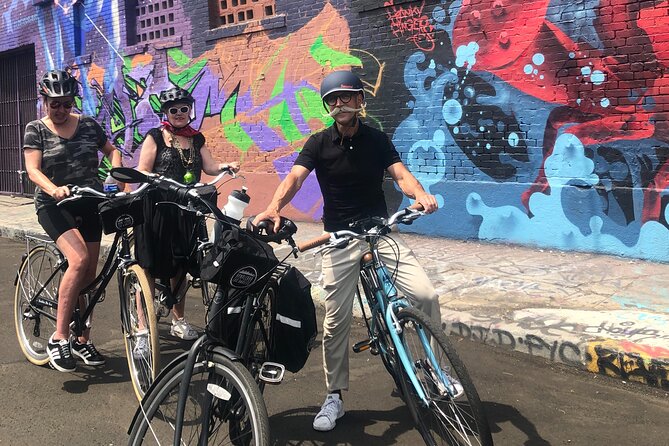
Reviewed · DOWNTOWN LOS ANGELES TOURS
Los Angeles Arts District Bike Tour
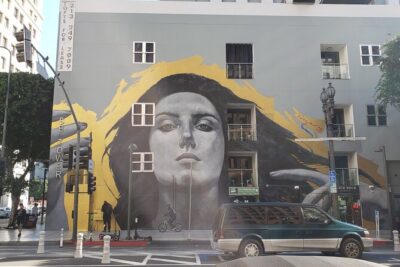
Los Angeles hides some of its best street art behind warehouses, side streets, and railroad tracks. This 2.5-hour Arts District bike tour takes you past murals, artists’ studios, galleries, restaurants, and small clubs that large sightseeing buses cannot reach.
I like the easy pace and the chance to stop at Hauser & Wirth, where you get time to look around on your own. I also like the way the route connects the Arts District with Little Tokyo, showing how these neighborhoods share a complicated past. The main drawback is that you need to feel comfortable riding on city streets, and the tour depends on good weather.
Key points to know
- Mostly flat riding: The route is described as easy and manageable, though you still need moderate fitness and city-bike skills.
- Small group format: A maximum of 10 people keeps the ride more personal and makes it easier to hear the guide.
- Art beyond the main streets: Expect alleyways, graffiti writing, working studios, murals, and lesser-known corners of the district.
- A useful gallery break: Hauser & Wirth gives you about 20 minutes to explore independently.
- Strong local context: The guide links the Arts District to Little Tokyo, the Go For Broke Monument, and the neighborhood’s earlier days.
- Good base for food: The tour begins and ends at a 100-year-old food hall with more than 45 food vendors.
Starting at a downtown food hall
The meeting point is Handlebar Bike Tours at 312 South Hill Street, with a 2:00 pm start. The base is inside a century-old food hall, so you can arrive early for a meal or stay afterward for a choice of more than 45 food vendors.
That setup is practical. The tour itself includes no food, and the route has no meal stop built into the schedule. If you want lunch before riding or a quick bite afterward, you have plenty of choices in the same place. I would arrive with enough time to locate the bike shop, use the restroom, and settle in before the group leaves.
You receive a bicycle, helmet, and live amplified commentary. The amplified guide matters on city streets, where traffic noise can swallow a normal speaking voice. The small maximum group of 10 should also make it easier to stay together and ask questions.
The tour is offered in English. It is aimed at riders age 12 and older who know how to ride a bike and can manage city streets. You do not need to be an athlete, but you should expect steady movement for about two and a half hours.
More Downtown LA tours in Los Angeles:
- Downtown Los Angeles Food Tour
★ 5.0 · 501 reviews - Old and New Downtown Los Angeles Walking Tour
★ 5.0 · 222 reviews - Culture and Arts Tour of Downtown LA with Angels Flight Ticket
★ 5.0 · 142 reviews
Riding into the Arts District
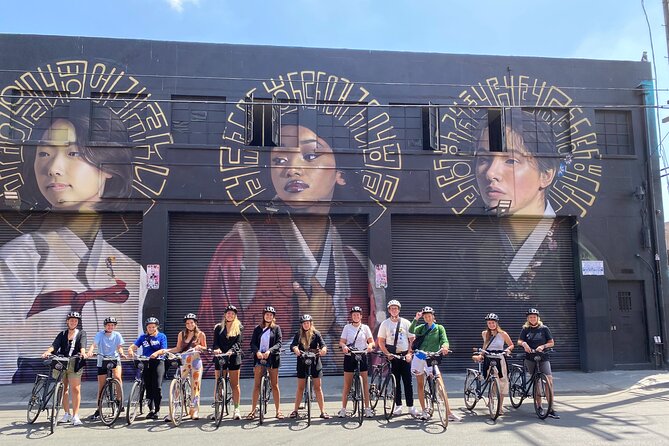
The ride first heads toward the Arts District through downtown and Little Tokyo. From there, the route moves into a neighborhood once defined by industrial buildings, warehouses, rail lines, and inexpensive work spaces.
The district has changed quickly. Artists’ lofts now sit near restaurants, clubs, pop-ups, music companies, and chef-led dining rooms. That mix is part of what makes the ride useful. You are not looking only at painted walls. You are seeing how art, housing, commerce, and real estate have reshaped one of downtown Los Angeles’s most talked-about areas.
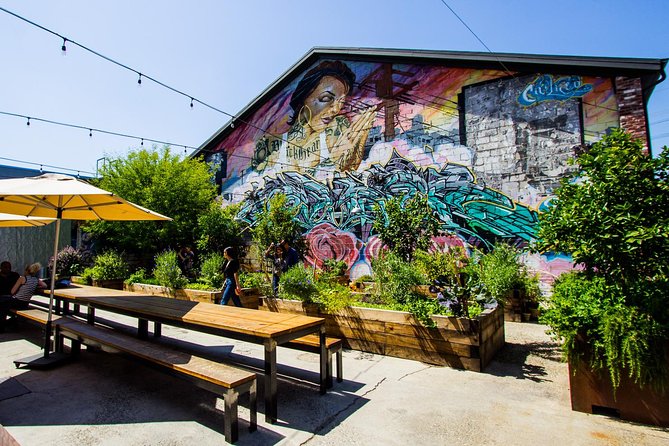
The route includes alleyways and side streets where graffiti writing and public art are easier to see from a bicycle than from a car. You may also pass spaces that are not obvious from a regular downtown sightseeing route. The guide explains the artists, the process behind the work, and the local culture around street art.
This is a good part of the tour for anyone who wants more than a list of mural names. The commentary is meant to explain how the work is made and why certain walls matter. Since street art can change or disappear, the exact mix of pieces may vary.
Angel City Brewery and the district’s gateway
Angel City Brewery is treated as an informal gateway to the Arts District. The stop is brief, about five minutes, and the tour does not include admission or drinks.
The value here is location and context rather than a long brewery visit. The building and surrounding area carry local artists’ work, and the stop helps mark the transition into the district. Do not plan on a tasting session or extended indoor break. This is a quick orientation point during the ride.
If you want to visit Angel City Brewery properly, you would need to do so outside the tour schedule and pay for anything you order yourself. The tour keeps moving, which helps it cover a lot of ground in a short time.
Murals around the Firehouse Hotel
The Firehouse Hotel area brings together several things the tour does well: graffiti writing, street art, music-related buildings, and restaurants. You may see work connected with the Warner Brothers music operation, along with walls that reflect the district’s changing character.
The stop lasts about 10 minutes. That is enough for an explanation and a close look, but not enough to inspect every nearby building. Keep your camera ready, but listen to the guide too. The point is not simply to collect mural photos. You are learning about the people and working methods behind the walls.
This part can also make the district’s contrasts clear. Public art sits beside restaurants and production spaces, while older industrial features remain in view. The bicycle gives you a better sense of how close these different uses are to one another.
More bike and e-bike tours in Los Angeles:
- The Ultimate LA Tour: Full Day Sightseeing Tour On Electric Bike
★ 5.0 · 478 reviews - Small-Group Electric Bike Tour of Santa Monica and Venice
★ 5.0 · 458 reviews - Beverly Hills Tour: Movie Star Homes and LA Sightseeing by E-Bike
★ 5.0 · 191 reviews - Los Angeles: Hollywood Sign Electric Bike Tour
★ 5.0 · 166 reviews
Twenty minutes at Hauser & Wirth
Hauser & Wirth is the main independent gallery break. The group pauses for around 20 minutes, allowing you to explore the expansive gallery complex on your own.
This is a welcome change of pace. Much of the tour is active and outdoors, while this stop gives you a chance to walk through an indoor art space without needing to stay beside the bicycle. It also gives you a moment to choose what interests you most rather than following a fixed explanation.
The stop is free, but it is not a full museum visit. Twenty minutes goes quickly, especially if an exhibition catches your attention. Think of it as a focused gallery visit within the larger ride, not a substitute for a full afternoon at Los Angeles’s art institutions.
The largest cluster of street art
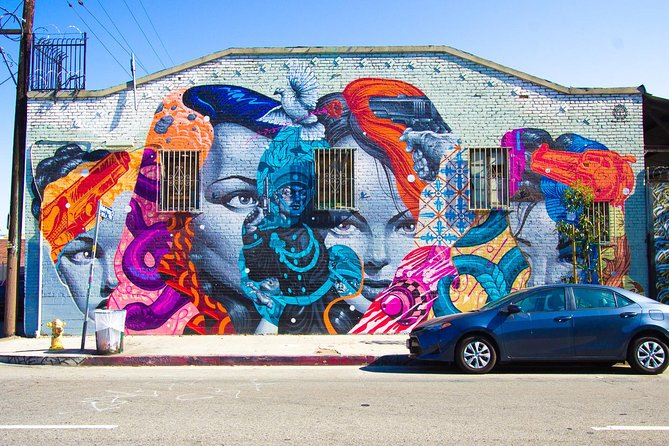
After the gallery stop, the ride returns to the district’s strongest concentration of murals and street art. The guide discusses the artists, production methods, and the unusual demands of creating large work on public walls.
This is likely the visual high point of the tour. You can expect a broad mix of styles and subjects, with the guide helping you notice details that are easy to miss from a passing car. The tour operator also aims to maintain relationships with artists and residents, which adds some care to the way the work is presented.
That point matters. Street art is tied to real neighborhoods, not just to a colorful photo opportunity. The guide’s explanation can help you see the difference between a commissioned mural, graffiti writing, and other forms of public art. The exact works may change, but the district’s large walls make this a dependable part of the route.
The American Hotel and the birth of the modern district
The American Hotel is described as the birthplace of the modern Arts District. The stop lasts about 10 minutes and gives the guide a chance to explain how this part of Los Angeles developed.
This is where the tour’s social history becomes more useful than a simple list of attractions. The Arts District did not begin as a polished dining and gallery zone. Its identity was shaped by artists, older buildings, inexpensive work-live spaces, and gradual redevelopment.
You will also pass a nonprofit that provides below-market live-work studios. That detail helps explain why the area became attractive to artists and why affordable creative space remains an important issue. It also gives the neighborhood more depth than its current restaurants and murals suggest.
Little Tokyo, museums, and the Go For Broke Monument
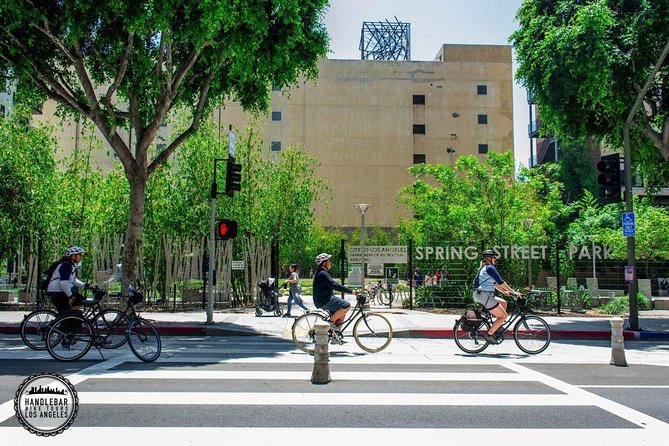
Little Tokyo is not an afterthought on this ride. You pass through it to reach the Arts District, and the guide explains how the two neighborhoods are linked.
The route includes a stop near the Japanese American National Museum, with commentary about the Museum of Contemporary Art and the Go For Broke Monument. The stop is short, about five minutes, so do not expect time for a full museum visit. It is a brief outdoor orientation and history lesson.
Little Tokyo adds an important layer to the tour. Its sushi, ramen, and anime shops create a different feel from the industrial buildings and mural walls nearby, yet the neighborhoods sit close together. This connection helps you understand downtown Los Angeles as a collection of overlapping communities rather than separate attractions.
If you want to visit the Japanese American National Museum or another museum in detail, plan a separate visit. The bike tour gives you context and a look at the area, but its schedule is built around riding.
Studios, restaurants, and places you only pass
The route includes several short stops and ride-bys that show how the Arts District works today.
Bestia is one of the district’s chef-driven restaurants. The stop lasts about five minutes and is for orientation rather than dining. Since food is not included, you could return later if you want a meal there, subject to the restaurant’s own schedule and availability.
Willow Studios represents the production side of the neighborhood. You pass by for about two minutes, a quick reminder that the Arts District is also home to working studios and media businesses.
The ride also passes Soho Warehouse, a private celebrity-oriented club beside the railroad tracks. Admission is not included, and the brief pass-by gives you an exterior glimpse only. You should not expect to enter.
Another stop features one of the district’s smaller clubs, while the route also includes a nonprofit that supports artists with live-work studios. These places help fill in the gaps between the headline murals. The Arts District is not only a gallery corridor. It is also a place where people work, eat, make music, produce media, and try to keep creative space available.
The 6th Street Viaduct finale
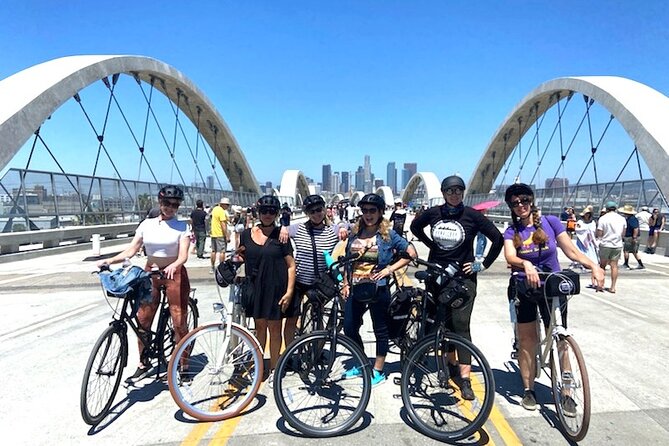
The 6th Street Viaduct provides the route’s big architectural finish. The tour spends about 10 minutes at the bridge, which has become a frequent Los Angeles film location.
The stop is included in the tour, with no separate admission charge. It gives you a broad view of the city and a chance to see one of downtown’s most recognizable modern structures from a bicycle.
This is also a good moment to appreciate the route as a whole. You have moved from Little Tokyo to murals, galleries, restaurants, studios, railroad tracks, and a major bridge. The ride is not just a single-theme art outing. It is a compact look at how downtown Los Angeles is built and rebuilt around different communities.
Is $82 a fair price?
At $82 per person, this is not the cheapest way to see downtown. You are paying for the bicycle, helmet, guide, amplified commentary, a small group, and a route that would be difficult to recreate efficiently on foot.
The value is strongest if you want interpretation. You could walk around the Arts District for free and see many murals on your own, but you would miss the route’s links between artists, studios, Little Tokyo, live-work spaces, galleries, and neighborhood history. You would also need to plan your own route and manage downtown traffic and distance.
The price makes less sense if you already know the district well or mainly want a long gallery visit. Hauser & Wirth gets only about 20 minutes, and several other stops last five minutes or less. This is a moving tour with many short looks, not a slow art-appreciation program.
For a first visit to the Arts District, the combination of equipment, access, and commentary makes the cost reasonable. The small group and easy pace add value, especially if you are visiting Los Angeles without a car.
Who will enjoy this ride most?
I would recommend the tour to adults, families with children age 12 or older, and anyone who wants a more active introduction to downtown Los Angeles. It also works well for people who like murals but want to understand the artists and neighborhood behind them.
The ride is described as mostly flat and easy, and one family found it comfortable with a daughter. Still, you need moderate physical fitness and the ability to ride on city streets. If you are uneasy around urban traffic or have not ridden a bicycle for some time, this may not be the right way to see the area.
You should also be comfortable spending most of the 2.5 hours outdoors. The tour requires good weather. If poor weather forces cancellation, you can choose another date or receive a full refund. You can cancel for a full refund up to 24 hours before the 2:00 pm start time.
My booking advice
Book this tour if you want a guided introduction to murals, galleries, Little Tokyo, and the working side of the Arts District, all in one compact outing. The easy pace, good bicycles, and patient guiding style make it approachable, and guides such as Jen have been praised for explaining both the art and the area clearly.
Skip it if you want a private museum visit, a brewery tasting, or a meal included in the price. Also skip it if city cycling makes you uncomfortable. For everyone else, this is a smart way to see a part of Los Angeles that is easy to skim past and hard to understand without local context.
FAQ
Where does the Los Angeles Arts District Bike Tour start?
The tour starts at Handlebar Bike Tours, located at 312 South Hill Street, Los Angeles, California 90013.
What time does the tour begin?
The scheduled start time is 2:00 pm.
How long does the bike tour last?
The tour lasts approximately 2 hours and 30 minutes.
Where does the tour end?
The activity ends back at the original meeting point.
Are bicycles and helmets included?
Yes. Bicycle use and a helmet are included, along with live amplified commentary from the guide.
What is the minimum age?
The minimum age is 12 years.
Does the tour include food or drinks?
No. Food is not included. The tour begins and ends at a food hall with more than 45 vendors, so you can arrange food before or after the ride.
What happens if the weather is poor?
The tour requires good weather. If it is canceled because of poor weather, you can choose a different date or receive a full refund.
Just added around Los Angeles
- Photo Tour of Los Angeles for Social Media★ 5.0 · 11 reviews
- Pacific Coast Highway: Smartphone Audio Tour, LA to Santa Maria★ 4.0 · 13 reviews
- Pasadena Puzzle Adventure: Stop the Bomb!★ 3.5 · 5 reviews
- Outdoor Escape Room in LA – Little Tokyo★ 5.0 · 7 reviews
- 3.5-Hour LA Story Tour: Our Most Popular Los Angeles Tour!★ 5.0 · 4 reviews
- 2 Day Beginner Surf Adventure★ 5.0 · 26 reviews
- Getty Center Tours for KIDS and FAMILIES!★ 5.0 · 5 reviews
- Private 3-Hour Hollywood to Beverly Hills Tour★ 5.0 · 5 reviews
Downtown Los Angeles Tours, compared.

The History and Architecture of Downtown Los Angeles
Read our review →
Downtown Los Angeles History and Architecture Walking Tour
Read our review →
The History and Architecture of Downtown Los Angeles
Read our review →
Browse the lists this tour appears in