
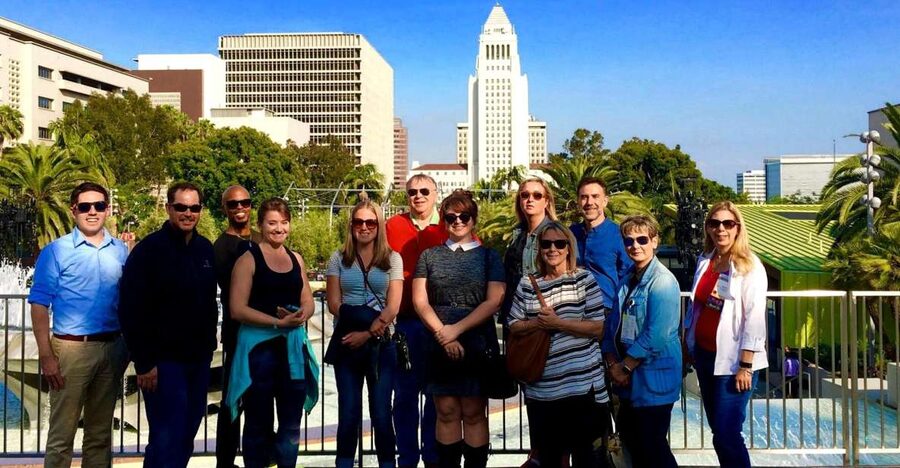
Reviewed · DOWNTOWN LOS ANGELES TOURS
Downtown Los Angeles: Culture and Arts Walking Tour
Downtown Los Angeles becomes much easier to understand once you stop treating it as a collection of famous buildings and start following its stories. This two-hour walk links the city’s old pueblo, grand railway station, modern art halls, fading commercial blocks, and renewed downtown core. You’ll hear how Spanish rule, car culture, public transit, and recent redevelopment shaped the city you see today.
I especially like the transit story, which gives you a fresh way to read Los Angeles beyond the usual traffic jokes. I also like the mix of places: The Bradbury Building, Grand Central Market, Angels Flight, Olvera Street, and Union Station give you plenty of visual variety in a short time. The main consideration is pace. Two hours covers a lot, so you’ll want comfortable shoes and a willingness to keep moving rather than linger inside every stop.
Key points to know before you book
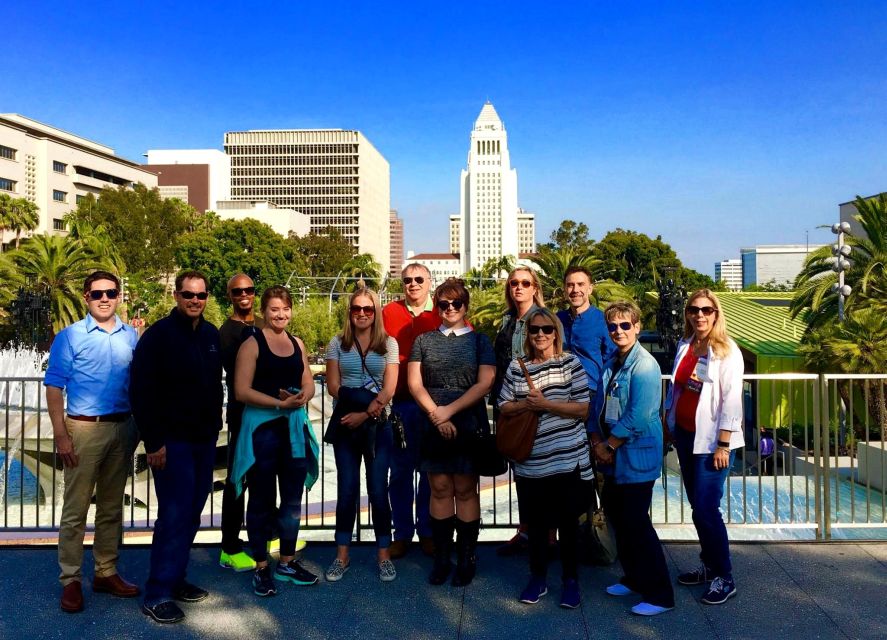
- You finish at Union Station: The walk begins at 541 South Spring Street and ends at 800 Alameda Street, giving you a useful starting point for exploring the station and nearby historic district.
- The tour connects old and new LA: You’ll move from Spanish colonial origins and Olvera Street to the Walt Disney Concert Hall, The Broad, and the modern downtown skyline.
- Transit gets serious attention: You’ll learn about LA’s early rail network, the struggle between mass transit and car culture, and the old Red Line.
- Angels Flight is part of the story: The famous hillside railway helps bring the city’s transit past to life.
- Guides bring different strengths: Paul is praised for clear, lively explanations, while Matt, Sam, Chris, and Phil have also led well-regarded tours.
- The $39 price is fair for a guided overview: You receive two hours with a professional English-speaking guide, but meals, drinks, and museum entrance fees are not included.
Why this walk gives you a better reading of Los Angeles
Many visitors see Downtown Los Angeles as a place to pass through on the way to Hollywood, the coast, or a sports event. This tour makes downtown the main subject. It shows you how a city with Spanish beginnings became a railroad center, then a car-oriented metropolis, and now a district being reshaped by new housing, restaurants, arts institutions, and investment.
That wide view is the tour’s real value. You are not simply ticking off buildings. You are learning why a grand railway station sits near the oldest street in the city, why a small funicular railway matters, and why modern concert halls and museums now share blocks with older commercial buildings.
The route also helps you see how uneven change can be. Recent redevelopment has brought new attention and energy to downtown, but the tour also addresses gentrification and the way renewal has changed daily life and the look of the area. That gives the walk a more honest edge than a simple celebration of new restaurants and polished architecture.
More Downtown LA tours in Los Angeles:
- Downtown Los Angeles Food Tour
★ 5.0 · 501 reviews - Old and New Downtown Los Angeles Walking Tour
★ 5.0 · 222 reviews - Culture and Arts Tour of Downtown LA with Angels Flight Ticket
★ 5.0 · 142 reviews
Starting on Spring Street with LA’s transit story
Meet outside the Spring Arcade building at 541 South Spring Street, Los Angeles, California 90013. The opening subject is public transportation, which is a smart choice in a city so closely linked with driving.
I like this beginning because it challenges the standard Los Angeles story. The city is often reduced to freeways and traffic jams, yet the tour explains that LA has an extensive metro system and a much longer transit past than many visitors expect. You’ll hear about the clash between mass transit and car culture, along with the demise of the original Red Line.
This is useful context for the rest of the walk. Transportation has shaped where people live, where businesses gather, and how downtown changed over time. Once you understand that, the route feels connected rather than random.
The tour is conducted in English and lasts two hours. Since the route crosses several downtown districts, it is best treated as a brisk urban walk. Bring comfortable shoes, and leave luggage or large bags behind. The meeting point is in a central part of downtown, so check the exact start time when booking.
The Bradbury Building, The Last Bookstore, and Grand Central Market
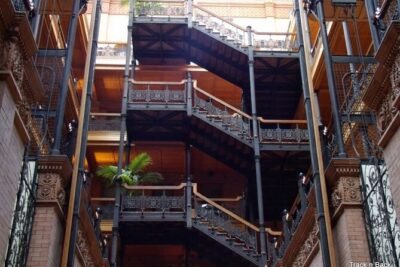
The next section brings you into some of Downtown LA’s most recognizable cultural and commercial spaces. The Last Bookstore gives the route a modern literary stop, while The Bradbury Building offers one of the city’s most distinctive architectural interiors and exteriors.
The Bradbury is especially worthwhile for visitors who enjoy buildings with a strong sense of place. It is not just another old facade. Its appearance helps explain the appeal of historic downtown, where ornate older structures sit close to new cultural venues and renovated commercial spaces.
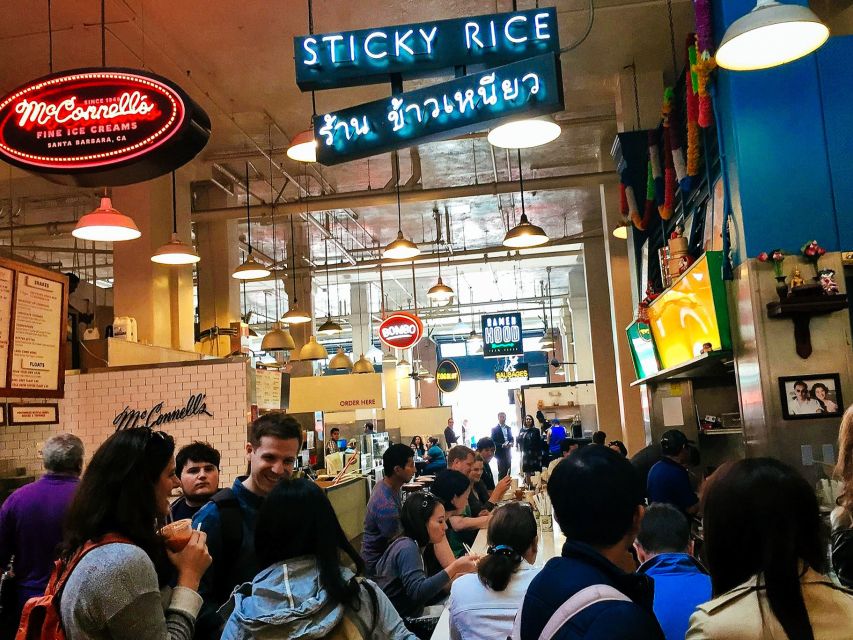
Grand Central Market adds a very different note. This is where the tour moves from architecture and civic history toward food and everyday urban life. Meals and drinks are not included, so you should not assume the tour provides a full food stop. Still, the market gives you a chance to see one of downtown’s best-known gathering places and may help you decide where to return later.
One useful detail from the tour experience is that a food break may be included in the flow, but the supplied information does not promise a meal or tasting. Plan to buy anything you want yourself, and remember that a two-hour route leaves limited time for sitting down.
Angels Flight and the city’s overlooked rail past
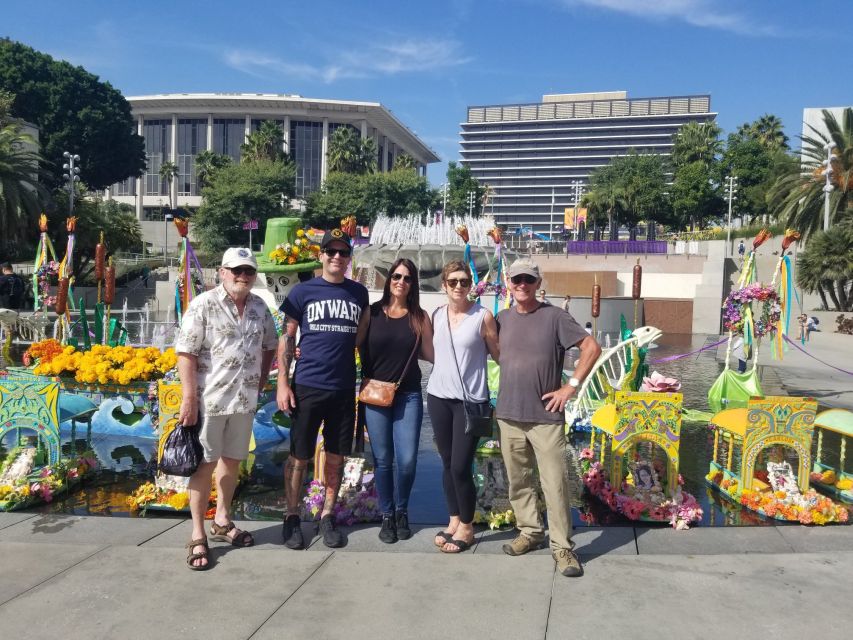
Angels Flight is one of the route’s most memorable details. This short railway is famous, photogenic, and easy to dismiss as a novelty. In the context of the tour, it helps explain how public transportation once worked at street level in downtown.
The walk uses Angels Flight to connect the larger transit story with something you can actually see and experience. You’ll hear about LA’s original Red Line and the long battle between rail travel and car-centered planning, then encounter a small piece of that older transit world.
The supplied tour information says you experience Angels Flight later in the route. Since entrance fees are not included in the activity price, check current arrangements and be prepared for any separate fare. The key value here is not simply the ride itself. It is the chance to understand why this small railway still matters in a city built on a much larger scale.
More walking tours in Los Angeles:
- Los Angeles Original 90-Minute Walking Tour to The Hollywood Sign
★ 5.0 · 693 reviews - LA: Express Hollywood Sign Guided Walking Tour with Photos
★ 4.9 · 310 reviews - Haunted Hollywood Walking Tour: True Crime and Creepy Tales
★ 5.0 · 299 reviews - Los Angeles: Hollywood Sunset Walking & Hiking Tour
★ 5.0 · 230 reviews
Grand Street’s concert halls and museums
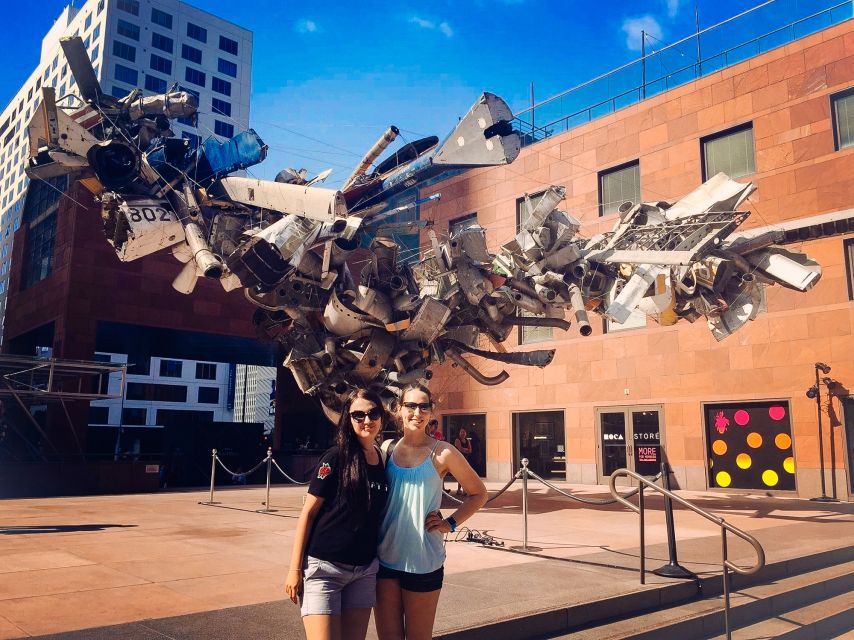
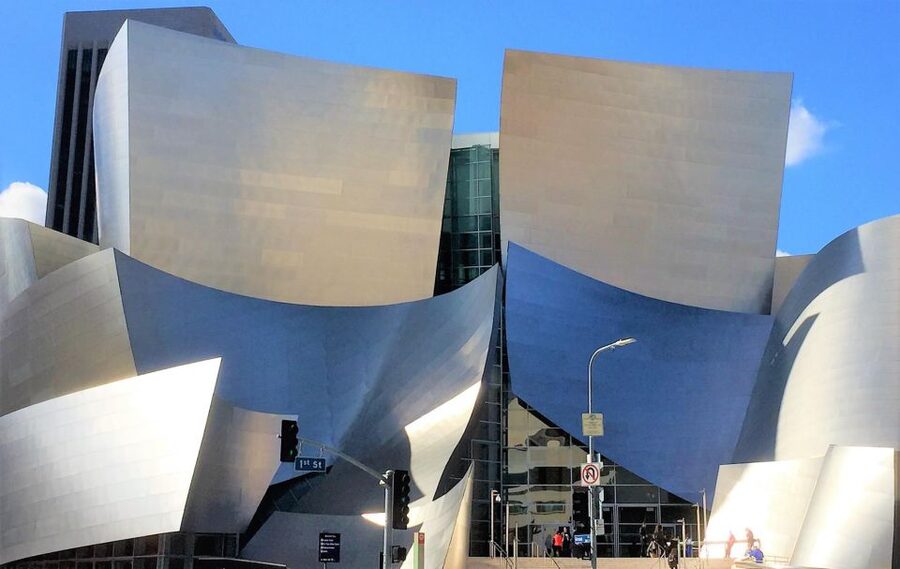
From the older parts of downtown, the route moves toward Grand Street and a group of major arts institutions. You’ll see the Walt Disney Concert Hall, the Music Pavilion, the Museum of Contemporary Art, and The Broad.
This is one of the strongest sections for architecture fans. The buildings have different designs and purposes, yet they sit close enough together to show how Los Angeles has invested in making downtown an arts destination. The Walt Disney Concert Hall is the visual star for many people, while The Broad and the Museum of Contemporary Art add the modern art side of the district.
You will see these institutions from the outside rather than receive museum admission. Entrance fees are not included, and the two-hour schedule is built around a walking overview. That is a plus if you want a broad introduction before choosing which museum or performance venue deserves more of your time.
I would not book this tour expecting lengthy gallery visits. I would book it if you want the setting, architecture, and civic story explained before you return independently. The stop also breaks up the older downtown material with bold, modern forms.
Civic Center and the people who shaped the city

The Civic Center section shifts attention from culture to government. Here you’ll learn about the administrative work that keeps a sprawling city running, along with figures such as former Mayor Tom Bradley and retired police chief William Parker.
This part is less about postcard views and more about power, policy, and the people behind Los Angeles institutions. That matters because downtown is not only a collection of historic buildings and arts venues. It is also the place where decisions about transportation, policing, planning, and public services have shaped the city.
The guide’s role is important here. A list of names and offices would be dry, but the tour is designed around stories about prominent men who helped build and shape Los Angeles. Paul has been praised for speaking clearly and loudly enough for the whole group, and several guides have been described as friendly, engaging, and able to keep the route moving.
Guide quality can vary from one departure to another, but the names connected with this experience include Paul, Matt, Sam, Chris, and Phil. The strongest comments consistently focus on clear explanations, warmth, and a strong command of local history. That is exactly what you want in a downtown walking tour.
Olvera Street and Los Angeles’s Spanish beginnings
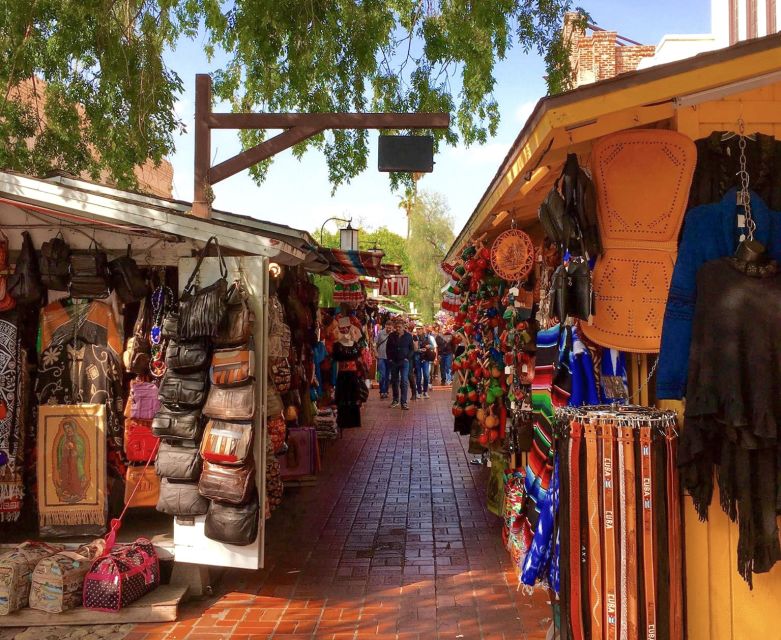
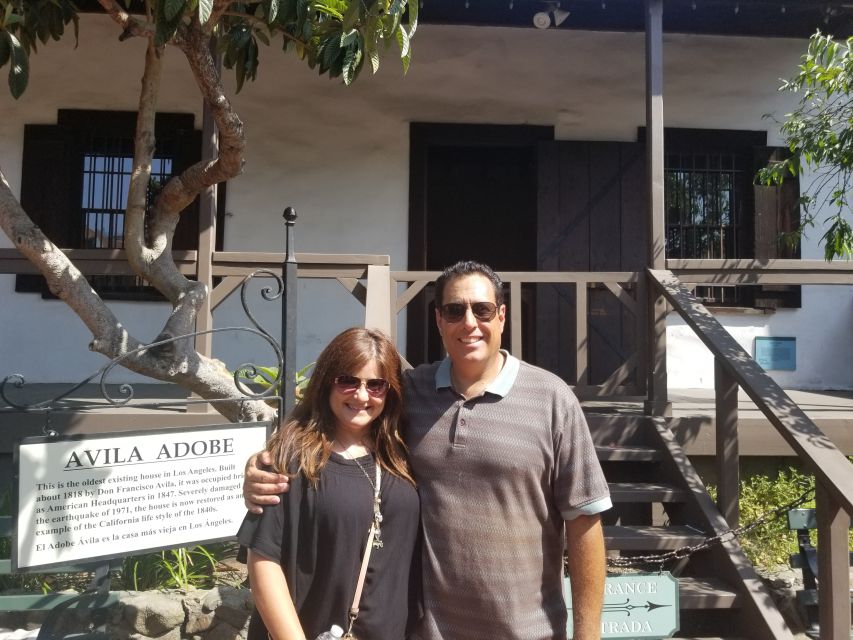
Olvera Street provides the clearest connection to the city’s earliest chapter. It is described as the oldest street in Los Angeles and the cultural center of downtown, with a setting meant to show what pueblo life was like.
Here the tour turns to the original settlers, the Spanish Empire, the name Los Angeles, and figures such as Pio Pico. This helps correct the idea that Los Angeles began with Hollywood, freeways, or the arrival of modern industry. The city’s roots reach much further back, and this section gives those origins a physical setting.
Olvera Street is also a useful contrast with the newer arts district. You’ll see how different eras are presented within a fairly compact part of the city. That variety is one of the best reasons to take a guided walk rather than simply browse a map. A guide can explain what you are looking at and why the site remains important.
You should expect a cultural and historical stop, not a long museum visit. The tour aims to give you context, local flavor, and a sense of the original settlement. If you want more time for shops, food, or close inspection, return after the walk.
Union Station, the grand finale at 800 Alameda Street
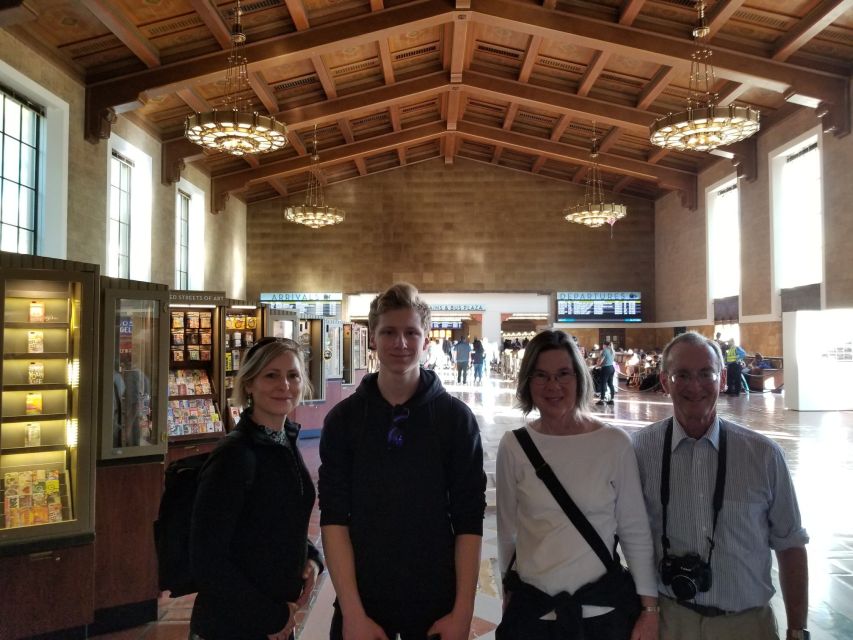
The tour ends at Union Station, officially known as the Grand Central of the West. Its mission revival and Art Deco details make it a fitting final stop, especially after spending the morning or afternoon hearing about rail travel and the decline of older transit systems.
Union Station brings together many of the tour’s themes. It is a major transportation hub, a historic building, and a reminder that rail once played a central role in the growth of Los Angeles. It also gives you a practical endpoint at 800 Alameda Street, Los Angeles, California 90012.
Ending here makes sense for visitors who want to continue exploring downtown on foot or use public transportation afterward. The tour does not provide a private transfer, and the activity ends at the station, so plan your next move from there.
The building itself is worth taking seriously. Its mission revival and Art Deco design show how Los Angeles could borrow from several architectural traditions while creating something distinctly local. After seeing contemporary concert halls and museums, Union Station gives you a strong older counterpoint.
How much value do you get for $39?
At $39 per person, this is a reasonable price for a two-hour guided walk through a complicated district. You are paying for a professional English-speaking guide, a planned route, and the background that helps connect sites many people would see as unrelated.
The value is strongest if you are new to Downtown LA, enjoy architecture, or want a historical framework before exploring alone. The price is less compelling if you mainly want museum entry, a food tour, or long periods inside individual buildings. Meals, drinks, and museum entrance fees are not included.
A guide can also save you time. Instead of researching Spanish settlement, public transit, civic leaders, architecture, and downtown renewal separately, you receive one connected account. Several guides, especially Paul, have been praised for covering a great deal in two hours without making the walk feel slow.
The tour also offers free cancellation up to 24 hours before departure and a reserve now, pay later option. Those policies are useful if your Los Angeles plans are still shifting, but the more important question is whether you enjoy a fast, information-heavy city walk.
Who should take this Downtown LA tour?
I would recommend it to first-time downtown visitors who want orientation, history, and architecture in one outing. It also suits repeat visitors who have seen the usual LA attractions but have not explored the central city on foot.
Families with older children and teenagers can do well here. One family reported that even teenagers enjoyed the tour and learned a lot. The mix of buildings, transportation, food-market atmosphere, and city stories gives younger visitors more variety than a lecture-style history walk.
Architecture fans should find plenty to enjoy, from The Bradbury and Union Station to the Walt Disney Concert Hall and the US Bank Tower. Food-minded visitors will appreciate the Grand Central Market stop, though they should budget separately for anything they want to eat.
I would be more cautious if you dislike walking, want guaranteed museum access, or need to carry large luggage. The route is compact enough for two hours, but there is no promise of a slow pace or long rest breaks. Comfortable shoes are essential.
My verdict: a smart first look at Downtown LA
Book this tour if you want Downtown Los Angeles explained through its buildings, transit systems, civic life, and Spanish beginnings. The strongest feature is the range. In two hours, you move from The Last Bookstore and The Bradbury Building to Grand Central Market, Angels Flight, Grand Street’s arts institutions, Olvera Street, and Union Station.
The experience is especially good with a guide such as Paul, Matt, Sam, Chris, or Phil, and the consistently high score of 4.8 from 62 ratings supports its appeal. Still, keep your expectations practical: this is a guided overview, not a museum tour or a sit-down food experience.
I would choose it early in a Los Angeles visit, then return to the places that catch your eye. It gives you a useful map of downtown, explains why the city grew as it did, and leaves you better prepared to explore on your own.
FAQ
How long does the Downtown Los Angeles walking tour last?
The tour lasts two hours.
Where does the tour begin?
It begins at 541 South Spring Street, Los Angeles, California 90013, outside the Spring Arcade building.
Where does the tour finish?
The tour finishes at 800 Alameda Street, Los Angeles, California 90012, at Union Station.
What language is the tour conducted in?
The tour is conducted in English with a live English-speaking guide.
What is included in the tour price?
The price includes a professional English-speaking guide.
Are meals and drinks included?
No. Meals and drinks are not included.
Are museum entrance fees included?
No. Entrance fees to museums are not included.
What should I bring?
Bring comfortable shoes for the two-hour city walk.
Can I bring luggage or a large bag?
Large bags and luggage are not allowed on the tour.
How much does the tour cost?
The listed price is $39 per person.
Can I cancel the booking?
Yes. You can cancel up to 24 hours in advance for a full refund. You can also reserve now and pay later.
Just added around Los Angeles
- Photo Tour of Los Angeles for Social Media★ 5.0 · 11 reviews
- Pacific Coast Highway: Smartphone Audio Tour, LA to Santa Maria★ 4.0 · 13 reviews
- Pasadena Puzzle Adventure: Stop the Bomb!★ 3.5 · 5 reviews
- Outdoor Escape Room in LA – Little Tokyo★ 5.0 · 7 reviews
- 3.5-Hour LA Story Tour: Our Most Popular Los Angeles Tour!★ 5.0 · 4 reviews
- 2 Day Beginner Surf Adventure★ 5.0 · 26 reviews
- Getty Center Tours for KIDS and FAMILIES!★ 5.0 · 5 reviews
- Private 3-Hour Hollywood to Beverly Hills Tour★ 5.0 · 5 reviews
Downtown Los Angeles Tours, compared.

The History and Architecture of Downtown Los Angeles
Read our review →
Downtown Los Angeles History and Architecture Walking Tour
Read our review →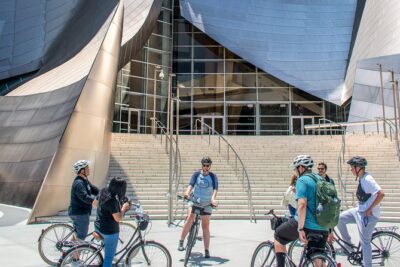
The History and Architecture of Downtown Los Angeles
Read our review →
Browse the lists this tour appears in