
Reviewed · LOS ANGELES WALKING TOURS
Los Angeles Chinatown and Little Tokyo Walking Tour
Los Angeles reveals two very different sides of its immigrant story on this compact Chinatown and Little Tokyo walking tour. You walk through old gateways, plazas, movie sites, artwork, gardens, and community spaces, then take the Metro Rail between neighborhoods. I like the way the tour links Chinese and Japanese American history instead of treating each district as a separate sightseeing stop.
I also like the human scale. A local guide leads a group of no more than 20, and guides Chris and Robert are specifically praised for clear explanations and patience. The main drawback is that two hours is a tight window, and you must pay separately for the short rail ride and find your own way back from Little Tokyo.
Key details to know before booking
- Chinatown starts at 943 North Broadway: Meet at 10:30 a.m. near Chinatown Plaza and prepare for a walking tour.
- The Metro Rail is part of the route: You ride from Chinatown to Little Tokyo, but the rail fare is not included.
- You visit the heart of both districts: Stops include Chinatown Plaza, Blossom Plaza, Japanese Village Plaza, and the Japanese American Cultural & Community Center.
- The tour connects history with current policy: Your guide discusses Chinese and Japanese immigration, Japanese American history, religion, and how present-day policies affect residents.
- The group is capped at 20 people: That gives the guide a reasonable chance to answer questions without making the walk feel like a moving crowd.
- The tour ends in Little Tokyo: From 244 San Pedro Street, you are two Metro Rail stops from the starting area, and the guide can point you toward the return route.
Why this two-neighborhood walk works
Many Los Angeles tours focus on film studios, beaches, or famous viewpoints. This one gives you a different way to read the city. Chinatown and Little Tokyo are not simply collections of restaurants and shops. They are places shaped by immigration, forced movement, changing laws, cultural preservation, and redevelopment.
I like that the tour uses the Metro Rail as part of the story. You do not just teleport from one district to the next in a van. The short train journey makes the two neighborhoods feel connected within the larger city, while also giving your feet a brief rest.
The format suits you if you want an introduction rather than a full-day cultural study. In about two hours, you get a guided overview of two major Los Angeles communities. You will not have time for a long meal, extensive shopping, or every museum, but you will leave with a clearer sense of what you are seeing when you return on your own.
More walking tours in Los Angeles:
- Los Angeles Original 90-Minute Walking Tour to The Hollywood Sign
★ 5.0 · 693 reviews - LA: Express Hollywood Sign Guided Walking Tour with Photos
★ 4.9 · 310 reviews - Haunted Hollywood Walking Tour: True Crime and Creepy Tales
★ 5.0 · 299 reviews
Starting among Chinatown’s gates and plazas
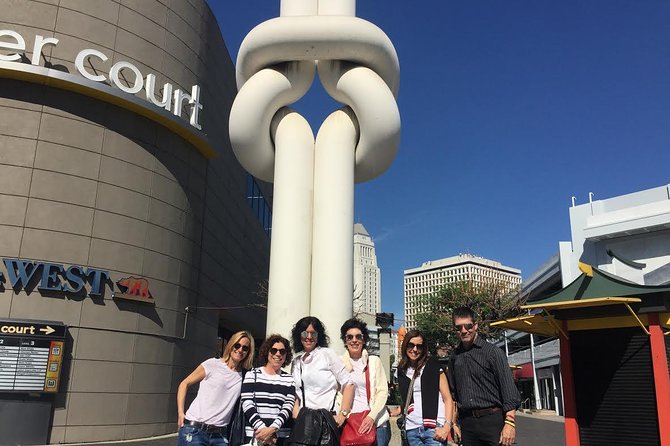
The walk begins at 943 North Broadway at 10:30 a.m., close to Chinatown Plaza. This is a useful starting point because the tour heads quickly into the district’s public face: gateways, open plazas, signs, restaurants, and small businesses.
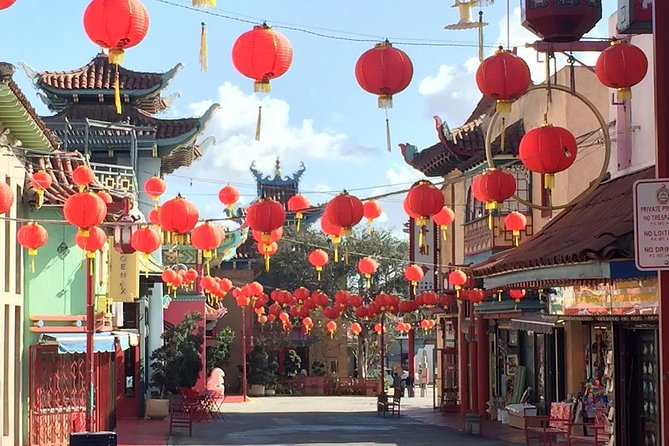
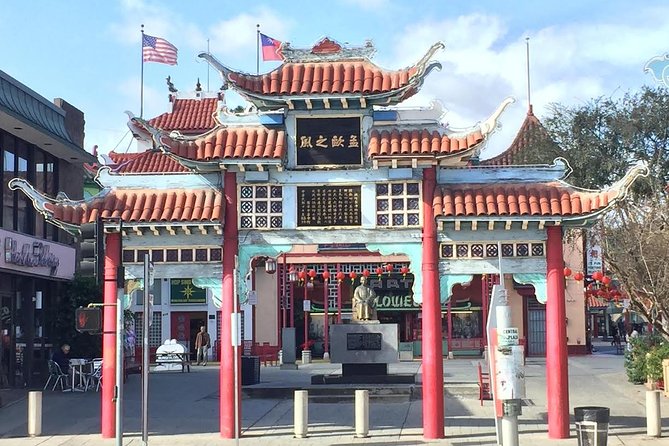
The Chinatown Celestial Dragon is one of the early visual markers. Nearby, the route includes the East and West Gates, which help frame Chinatown as a neighborhood with a distinct identity rather than just another section of downtown Los Angeles.
Chinatown Plaza is also a practical place to get your bearings. You can expect the guide to explain what you are looking at as you move through the area, rather than simply point out buildings and names. Guides Chris and Robert are noted for taking time with explanations, so this is the part of the tour where asking a question should be worthwhile.
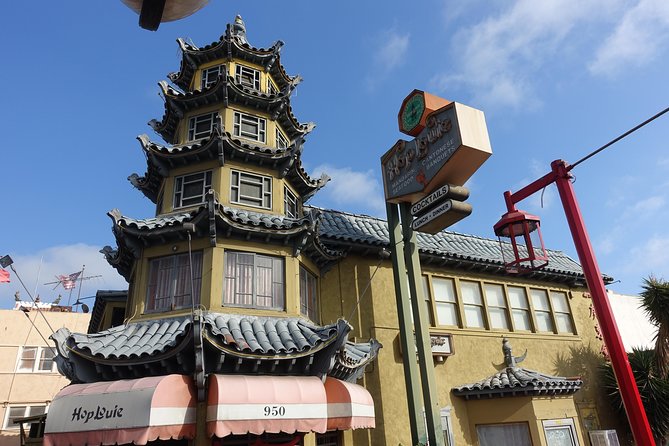
The route also includes Hop Louie restaurant and Wonder Bakery. The information provided does not promise a tasting or a meal, so treat these as cultural and architectural stops, not included food experiences. Still, food businesses are an important part of how a neighborhood presents its identity, and seeing them in context adds more than a generic list of landmarks would.
Movie locations and the art of Tyrus Wong
A movie location site appears along the Chinatown portion of the route. Los Angeles often turns ordinary streets into recognizable screen settings, and this stop adds a film connection without letting the whole tour become a Hollywood trivia walk.
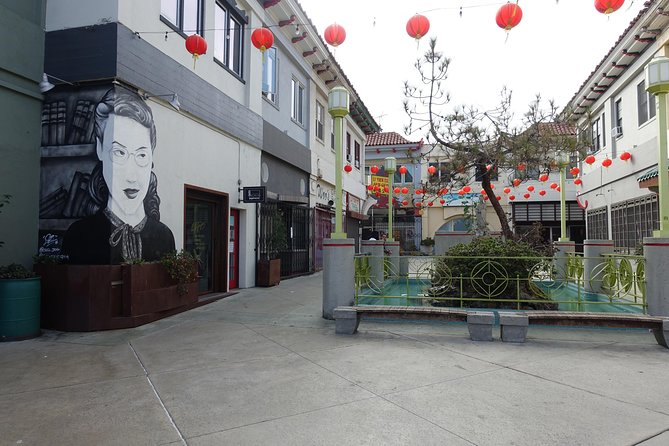
You also see artwork by Tyrus Wong. His name gives the tour a strong link between Chinese American creative work and the city’s popular culture. The supplied details do not specify the exact piece or how long the group pauses there, so you should expect an interpretive stop rather than a formal museum visit.
This balance is one of the tour’s strengths. You get visual details that make the walk memorable, but the guide’s main job is to connect those details to people and communities. I would pay close attention here, since art and film can make broader historical themes easier to remember after the tour ends.
Blossom Plaza and the older Italian connection
Blossom Plaza takes the group into a less obvious part of the neighborhood story. The plaza stands on the site of old Little Italy, so the tour does not present Chinatown as though one community has occupied the area unchanged for all time.
The stop lasts about four minutes, which tells you what to expect. This is a quick explanation and orientation point, not a long visit. Its value comes from the contrast: Los Angeles neighborhoods shift as populations move, businesses change, and public decisions reshape local identity.
I find short stops like this useful when they are handled well. They give you a reason to look at a familiar-looking plaza differently. The tradeoff is that you will not get a detailed account of Italian Los Angeles in such a brief pause.
A different kind of day out around Los Angeles:
- Full-Day Iconic Sights of LA, Hollywood, Beverly Hills, Beaches and More
★ 5.0 · 6,147 reviews - Warner Bros. Studio Tour Hollywood
★ 4.5 · 5,246 reviews - Hollywood, Beverly Hills & Celebrity Homes Tour by Open Air Bus
★ 5.0 · 2,557 reviews - Hollywood Sign 2.5-Hour Tour with Comedians and Their Dogs
★ 5.0 · 2,496 reviews
The Metro ride between Chinatown and Little Tokyo
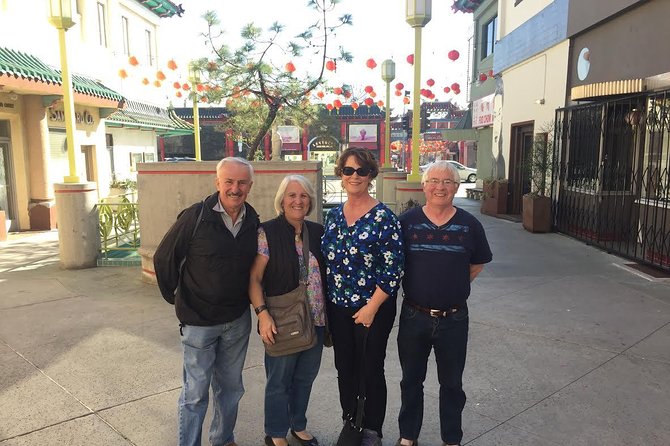
The tour then uses Metro Rail to reach Little Tokyo. The ride takes about 10 minutes, and the fare is separate from the $38 tour price. The guide can help you obtain the fare at the time of the tour, which removes some of the stress if you are unfamiliar with the system.
Bring a little extra payment flexibility and do not assume the ticket price covers every part of the experience. The rail ride is short, but it is not a minor detail. The tour ends in Little Tokyo, and returning to the Chinatown starting area requires another two-stop Metro Rail ride on your own.
This transfer is both practical and meaningful. You experience the city’s public transportation while moving between two districts that sit within the same downtown area but have distinct histories. If you dislike switching between walking and transit, this may feel less smooth than a private vehicle tour. If you want to see how the neighborhoods fit into Los Angeles itself, it adds useful context.
Learning how Japanese American history shaped Little Tokyo
The Little Tokyo portion moves beyond surface-level sightseeing. The guide discusses the history of Japanese Americans and the policies that affect residents today. This is an important reason to choose the tour instead of simply wandering through Japanese Village Plaza with a camera.
The details supplied for this stop do not list every historical topic, so you should not expect a full museum lecture. You can expect the guide to provide a framework for understanding the neighborhood and to explain why its community spaces matter.
The tour also covers religions of the Japanese people. That gives the walk a cultural layer that many short city tours leave out. Religion is presented as part of the neighborhood’s identity, not as an isolated architectural detail.
I would listen closely during this section, especially if you are new to Japanese American history. The guide’s explanation can help you see temples, plazas, gardens, and community buildings as places with meaning, not just photogenic stops.
Japanese Village Plaza at the center of Little Tokyo
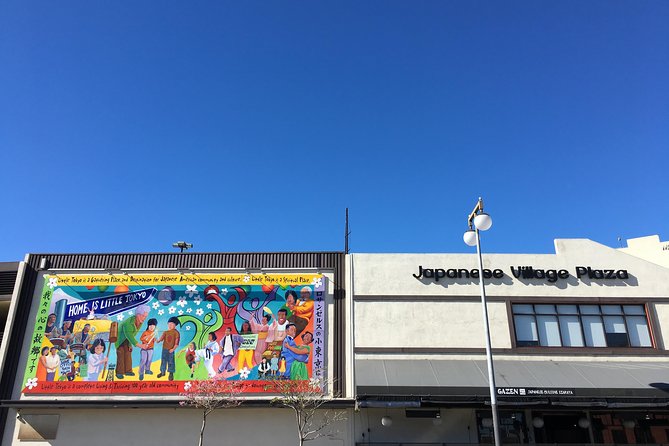
Japanese Village Plaza is described as the center of Little Tokyo in Los Angeles, and the tour spends about 15 minutes here. That is enough time for a focused explanation and a look around, though not enough for a leisurely meal or extended shopping.
This is likely the most immediately accessible part of the Little Tokyo visit. The plaza gives you a clear sense of the neighborhood’s public identity and provides a central point from which to understand nearby cultural institutions.
I like the stop because it gives the tour a physical anchor. After hearing about immigration, religion, and policy, you have a place where those themes meet everyday community life. Just keep your expectations in check: the tour price does not include food, shopping, or a separate attraction ticket.
The Japanese American Cultural & Community Center
The final major stop is the Japanese American Cultural & Community Center at 244 San Pedro Street. It is home to the Nisei festival and Japanese gardens, and the tour spends about 15 minutes here.
This ending gives the walk a community focus rather than finishing at a purely commercial plaza. Festivals and gardens point to how culture is maintained and shared across generations. The center also gives the guide a natural place to discuss Japanese American life beyond the past.
The tour ends here, not back at Chinatown. That matters when planning the rest of your day. You can use the two-stop Metro Rail ride to return toward the starting area, and the guide can point you in the right direction, but that return journey is not included in the tour price.
How much value do you get for $38?
At $38 per person, this is fairly priced for a two-hour guided walk that includes two neighborhoods and a local guide, but the value depends on how much context you want. If you only want to stroll, take photos, and stop for food, you can explore on your own. In that case, the extra fee may not feel necessary.
I think the price works better for you if you want the history explained as you go. The tour covers Chinese immigrant history, Japanese American history, religious traditions, changing neighborhood identity, public policy, art, film, and community institutions in a short period.
The rail fare is an additional cost, and you should also budget for your return trip from Little Tokyo. No admission fees are listed for the main stops, so you are paying mainly for the guide’s time and interpretation.
The group maximum of 20 is another factor. It is not a private tour, but it is small enough to remain manageable. A patient guide can make a major difference here. Chris and Robert are specifically identified as guides who explain each stop carefully, and that is the kind of leadership this route needs.
Who will enjoy this tour most?
I would recommend it to first-time visitors who want a grounded introduction to downtown Los Angeles. It also suits anyone interested in immigrant history, neighborhood change, Japanese American culture, Chinese American culture, public transportation, or the way film and art shape a city’s identity.
Families and older children may find the mix of walking, public art, food businesses, and a train ride easier to follow than a long lecture. Most people can participate, and service animals are allowed. Since the experience is near public transportation, it is practical if you are already exploring central Los Angeles without a car.
The tour may be less suitable if you want extensive free time. Two hours passes quickly, and the schedule includes several short stops. It also requires enough walking to move between locations, plus the Metro transfer.
Because the tour depends on good weather and a minimum number of bookings, a cancellation is possible. If that happens, you are offered another date or experience, or a full refund. You can cancel for a full refund up to 24 hours before the start time, but late cancellations are not refunded.
My advice on booking
Book this tour if you want a compact, guided explanation of two important Los Angeles neighborhoods and you value local context more than a long list of attractions. The strongest part is the connection between Chinatown and Little Tokyo, with the Metro ride making the city itself part of the route.
I would skip it if your main goal is eating, shopping, or visiting museums at your own pace. The tour gives you an overview, not a full day in either district.
For most people, the best plan is to take the walk, note the places that interest you, then return to Little Tokyo or Chinatown later for more time. At $38, that makes sense: you pay for a useful introduction, then explore the details yourself.
FAQ
How long does the Chinatown and Little Tokyo walking tour last?
The tour lasts approximately two hours.
What time does the tour start?
The tour starts at 10:30 a.m.
Where does the tour begin?
The meeting point is 943 N Broadway, Los Angeles, California 90012, near Chinatown Plaza.
Where does the tour end?
The tour ends at the Japanese American Cultural & Community Center at 244 San Pedro Street, Los Angeles, California 90012.
Is Metro Rail fare included?
No. Rail fare between Chinatown and Little Tokyo is not included. The guide can assist with obtaining fare during the tour.
How do I return to the starting area after the tour?
The ending point is two Metro Rail stops from the starting area. The guide can point you in the right direction, but your return fare is not included.
What does the tour include?
The tour includes a local guide and the walking experience through Chinatown and Little Tokyo.
What is the maximum group size?
The tour can have a maximum of 20 people.
Can I cancel for a full refund?
Yes. You can cancel at least 24 hours before the start time for a full refund. Cancellations made less than 24 hours before the start time are not refunded.
Just added around Los Angeles
- Photo Tour of Los Angeles for Social Media★ 5.0 · 11 reviews
- Pacific Coast Highway: Smartphone Audio Tour, LA to Santa Maria★ 4.0 · 13 reviews
- Pasadena Puzzle Adventure: Stop the Bomb!★ 3.5 · 5 reviews
- Outdoor Escape Room in LA – Little Tokyo★ 5.0 · 7 reviews
- 3.5-Hour LA Story Tour: Our Most Popular Los Angeles Tour!★ 5.0 · 4 reviews
- 2 Day Beginner Surf Adventure★ 5.0 · 26 reviews
- Getty Center Tours for KIDS and FAMILIES!★ 5.0 · 5 reviews
- Private 3-Hour Hollywood to Beverly Hills Tour★ 5.0 · 5 reviews
Los Angeles Walking Tours, compared.
Los Angeles Original 90-Minute Walking Tour to The Hollywood Sign
Read our review →
Express Hollywood Sign Guided Walking Tour with Photos
Read our review →
Haunted Hollywood Walking Tour: True Crime and Creepy Tales
Read our review →
Downtown Los Angeles History and Architecture Walking Tour
Read our review →
Hollywood: Haunted Walking Tour, True Crime, Creepy Tales
Read our review →Browse the lists this tour appears in