
Reviewed · LOS ANGELES MUSEUMS AND GETTY TOURS
La Brea Tar Pits and Museum Admission Ticket with Excavator Tour
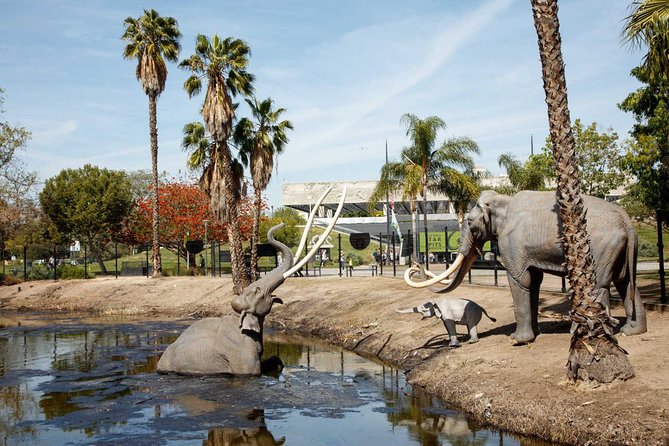
Los Angeles has a working Ice Age fossil site right beside its museums and busy streets. At La Brea, you can watch tar bubble at the Lake Pit, walk among active excavation areas, and then see the bones pulled from the ground. I like that the science is still happening here, not locked away in a display case. I also like that the visit works for both curious adults and children who need something they can see and touch.
The small museum is easy to cover in about an hour, while the outdoor grounds and included Excavator Tour can bring the visit closer to two hours. The price is reasonable for Los Angeles, especially since the ticket includes Pit 91, the Pleistocene Gardens, Atrium access, and the tour. The main caution is timing: the Excavator Tour is not always available on holidays or at every time of day, so check the schedule before you count on it.
Key points to know before you go
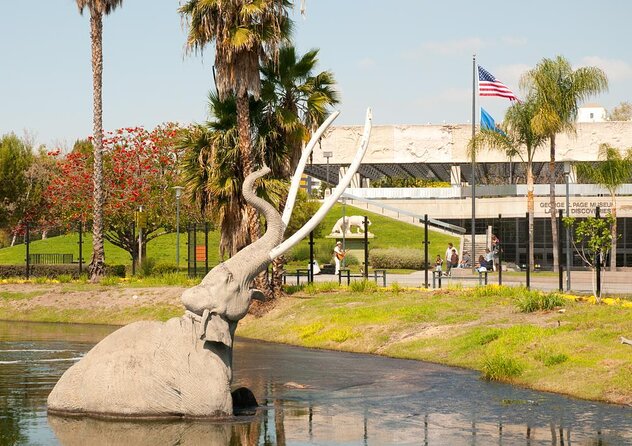
- Watch real tar bubble: The Lake Pit gives you the odd, memorable sight of asphalt slowly oozing in the middle of Los Angeles.
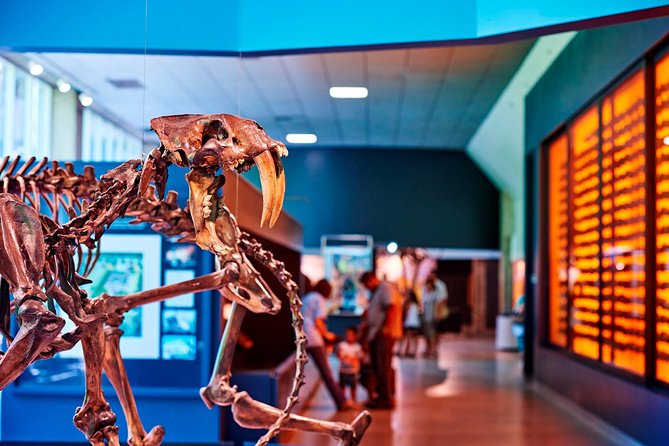
- See fossils from Ice Age Los Angeles: Mammoths, saber-toothed cats, dire wolves, and ground sloths fill the museum displays.
- Take the included Excavator Tour: The tour covers the tar pits, Fossil Lab, Observation Pit, and Project 23. Guides such as Becca and Emily have been praised for making the science clear and lively.
- Plan for about two hours: The museum itself may take an hour, but the outdoor pits, gardens, lab viewing areas, and tour deserve extra time.
- Good for children: Touchable exhibits, friendly staff in green shirts, and clear explanations help younger visitors stay involved.
- Check what is not included: The Ice Age Encounters show and 3D film require separate tickets, and some areas or tours may occasionally be closed.
Why this strange tar site matters
The La Brea Tar Pits are not a reconstructed attraction. They are an active scientific site where asphalt seeps have preserved the remains of animals that lived in the Los Angeles area during the Ice Age.
That makes the visit different from a standard natural history museum. You are not only looking at old bones. You are also seeing the place where many of those bones were found and watching scientists continue the work.
The site is especially surprising because of its setting. Los Angeles is usually associated with film studios, palm trees, and traffic. Here, a patch of ground has trapped animals for thousands of years and produced millions of fossils. That contrast is part of the appeal.
I would set aside roughly two hours. The indoor museum can be seen in about an hour, but rushing through the outdoor grounds would miss much of the point. If the Excavator Tour is running, build your visit around its scheduled time.
More museums and galleries in Los Angeles:
- Los Angeles: Petersen Automotive Museum Entry & Vault Access
★ 4.8 · 264 reviews - Los Angeles: Battleship Iowa Museum Ticket
★ 4.6 · 249 reviews - Private Getty Center to Griffith Observatory Guided Tour
★ 5.0 · 185 reviews
Start outside at the bubbling Lake Pit
Begin outdoors. The Lake Pit is the most immediately unusual part of the visit. Tar bubbles and oozes from the ground, giving you a clear look at the asphalt seeps responsible for the site’s fossil record.
The sight is not dramatic in a theme-park way. It is slow, sticky, and oddly quiet. That is exactly why it works. You are looking at a natural process that helped preserve mammoths, cats, wolves, and other animals long before Los Angeles existed as a city.
The outdoor grounds are free to walk around, but the museum admission gives you a better explanation of what you are seeing. I recommend looking at the pits first, then going inside. The fossils and diagrams make more sense after you have seen the tar itself.
Some outdoor areas may be closed during a visit. The main tar pit has occasionally been unavailable, and one museum area may also close for operational reasons. If a particular pit is important to you, check current conditions before booking.
Walk through the Pleistocene Gardens
The Pleistocene Gardens add a useful sense of place. They show prehistoric plant life and help you picture Los Angeles during the period when the animals found here were alive.
This is a quieter part of the visit, and it gives children room to move after time indoors. The grounds are pleasant for a short walk, though this is not a large botanical garden or a full-day attraction by itself.
I like the gardens because they keep the focus on the setting. The museum has impressive bones, but the plants help explain that these creatures belonged to a living environment. You get a better idea of what prehistoric Los Angeles may have looked like rather than seeing the animals as isolated specimens.
See where new fossils are being found
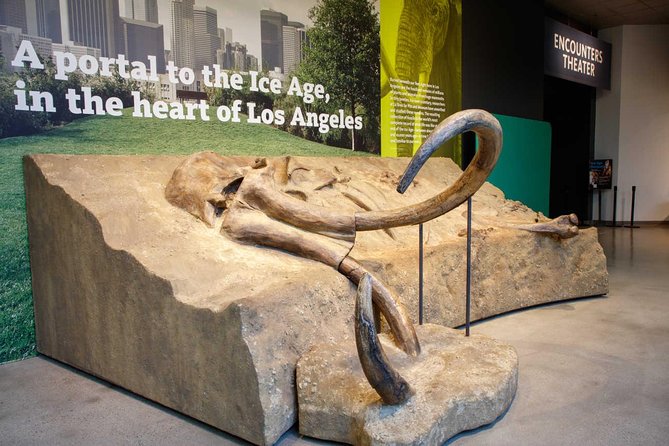
The active dig areas are one of the strongest reasons to choose this attraction over a regular fossil hall. Excavators continue to collect material, and Project 23 is one of the newer excavation sites included in the visit.
Pit 91 access is also included. These areas show that paleontology is not finished business here. Scientists still sort through the ground, identify remains, and preserve specimens for future study.
The exact activity you see can vary. You might see an excavation area, tools, or staff working with material rather than a major discovery happening in front of you. That is normal. The value is in seeing the process and understanding that fossil work is careful, patient labor.
The Observation Pit adds another useful stop. It helps connect the visible outdoor tar with the work carried out behind the scenes. If you have children with you, this is a good point to explain that a fossil find is only the beginning. It must be removed, cleaned, identified, and recorded.
More attraction passes and tickets in Los Angeles:
- Universal Studios Hollywood General Admission Ticket, California
★ 4.0 · 1,489 reviews - Madame Tussauds Hollywood Tickets
★ 4.6 · 516 reviews - Skip the Ticketing Line: Aquarium of the Pacific General Admission Ticket
★ 4.5 · 485 reviews - Battleship IOWA General Access Pass
★ 5.0 · 269 reviews
Inside the museum, meet the Ice Age animals
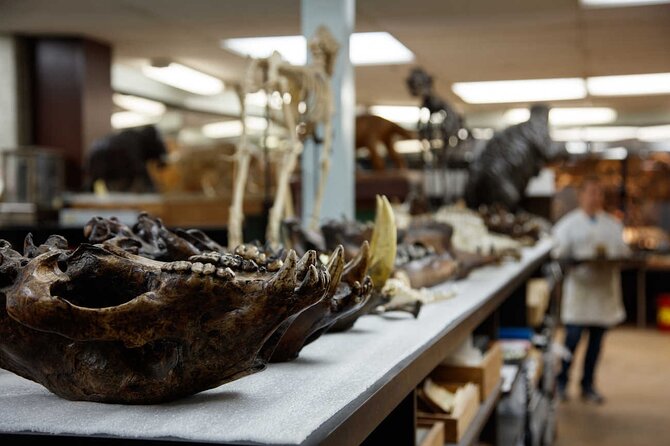
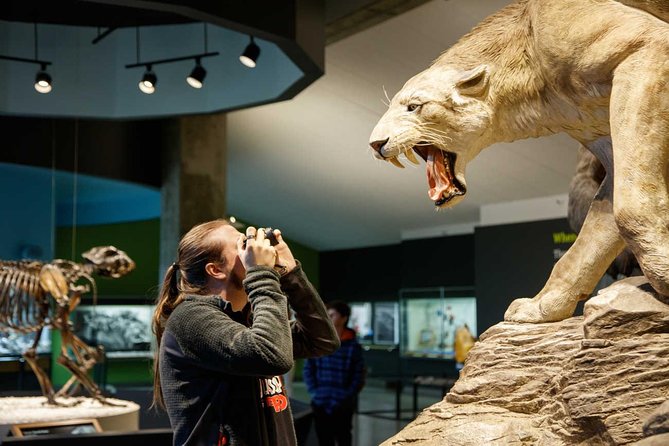
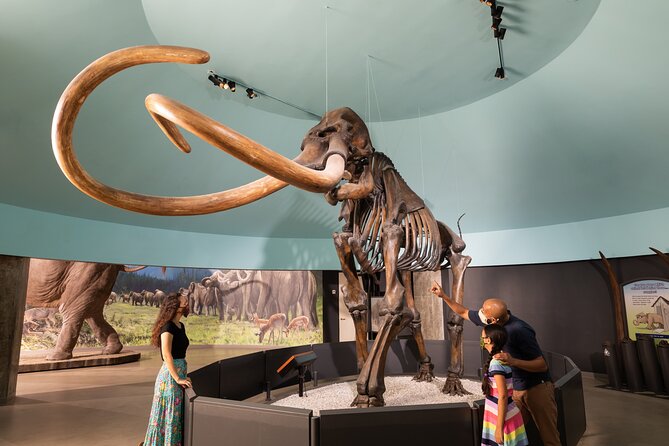
The museum displays fossils from mammoths, saber-toothed cats, dire wolves, and ground sloths. The collection is not enormous, and you should not expect a full-day natural history museum. Its size is actually a benefit if you are visiting with children or fitting it between other Los Angeles plans.
Displays are arranged clearly, with labels that explain the animals and the conditions that preserved them. The bones are the main attraction, but the explanations give them meaning. You see not only the size of a mammoth or the teeth of a saber-toothed cat, but also how these animals fit into prehistoric life.
You can move through the museum at your own pace. Some children may finish quickly, while others can spend two or more hours with the exhibits, the film, and the outdoor areas. Touchable displays help younger visitors stay involved.
The museum is also a good choice for adults who want something more focused than a giant science center. You can see the main collection without becoming tired or losing the story among hundreds of unrelated exhibits.
Look through the Fossil Lab

The clear-glass Fossil Lab lets you watch paleontologists and other staff work on recent finds. This is one of the most useful features for anyone who wants to understand how fossils become museum specimens.
You may see cleaning, sorting, or preparation work rather than a finished display. That unfinished quality is important. It shows the long path between finding a bone in tar and placing it under museum lights.
The lab also gives the visit a human scale. You can see the care required to preserve fragile material, and you can ask questions when staff are available. Children often respond well because the work is visible and practical.
The staff in green shirts have been especially good at engaging families, explaining things in simple terms, and answering questions. This is not a formal lecture hall experience. It feels more like a chance to stop, look closely, and ask what is happening.
Reserve time for the Excavator Tour
The included Excavator Tour is worth prioritizing. It provides the basic story of the tar pits, explains how animals became trapped, and takes you toward the Fossil Lab, Observation Pit, and Project 23.
A guide can tie the separate parts of the visit together. Without the tour, you may see bubbling tar, bones, and work areas but miss how they relate to one another. A good guide also adds the practical details that labels cannot always cover.
Becca has led a particularly well-received afternoon tour, and Emily has been praised for being personable and clear. The exact guide depends on the day, but the experience is strongest when you arrive ready to listen and ask questions.
The schedule matters. The tour is included with admission, but it is not automatically available at every hour. One family arrived on a holiday when tours were not being offered, despite having purchased a ticket that suggested otherwise. Another visitor missed the excavator demonstration because the timing had not been checked.
My advice is simple: look up the current tour time before you go, then arrive early enough to find the meeting point. If the tour is central to your plans, confirm that it operates on your date, especially around holidays.
The film and extra shows cost more
The Ice Age Encounters show and 3D film are not included in this admission ticket. Tickets are available on site, but you should allow for that extra cost if you want the full program.
The 3D film has been singled out as more engaging than many museum films. It can be a useful choice if you need a seated break or want a more dramatic explanation of Ice Age Los Angeles.
Still, the main ticket gives you enough to do without purchasing the add-ons. The outdoor pits, museum displays, lab viewing area, gardens, and Excavator Tour provide the core experience. If you have only two hours, I would put the included tour and outdoor pits first.
Is $18 a fair price?
At $18 per person, this is a good-value Los Angeles attraction, particularly for families and museum fans. The ticket covers the main museum and outdoor experience, plus the Excavator Tour, Pit 91 access, Pleistocene Gardens, and Atrium access.
The value comes from variety rather than size. You get a park-like walk, a working fossil site, a compact museum, an active lab view, and a guided explanation. That is more satisfying than paying the same amount for a small room of static displays.
The price feels less attractive if the main pit or tour is closed, or if you expected a large museum with hours of exhibits. This is a focused stop, not a giant institution. Most people should plan on about two hours, although families with children can spend longer.
Mobile ticketing makes entry simple. The site is near public transportation, service animals are allowed, and the visit involves a moderate amount of walking. Most people can take part, but you should still expect time on your feet across both indoor and outdoor areas.
Who will enjoy this most?
Families are a natural fit. The animals are familiar and dramatic, the visit is not too long, and children can see tar, bones, excavation areas, and hands-on displays in one outing. Staff often make a real effort to bring younger visitors into the conversation.
The attraction also suits solo visitors and couples who enjoy science, geology, or unusual Los Angeles history. You can take your time with the labels, watch the Fossil Lab, and walk the grounds without needing to fill an entire day.
It is less suitable if you want a large entertainment attraction, a long guided tour, or a guaranteed demonstration at any hour. The site is modest in size, and its pace is scientific rather than theatrical.
If you are already visiting nearby museums, La Brea works well as a short stop. If you have only one free afternoon in Los Angeles, it is worth choosing if the idea of seeing real excavation work appeals to you more than another standard city attraction.
Booking, timing, and cancellation advice
The attraction is open daily from 9:30 a.m. to 5 p.m. for the stated operating period. Since the tour schedule can vary, I would avoid arriving late in the day if you want the Excavator Tour.
Free cancellation is available up to 24 hours before the experience start time for a full refund. Cancellations or changes made within 24 hours are not refunded or accepted, and the cut-off uses local time.
The ticket is normally booked about 13 days ahead, but the practical issue is not simply getting admission. It is matching your date and arrival time with the tour and any special programs you want to see.
Should you book the La Brea Tar Pits ticket?
Book it if you want a reasonably priced, family-friendly Los Angeles stop with real science behind it. The bubbling Lake Pit, active dig areas, Fossil Lab, and Ice Age fossils give the visit a strong sense of place, while the compact size keeps it manageable.
I would especially recommend it if you can attend the Excavator Tour. Check the schedule first, and treat the 3D film and Ice Age Encounters show as optional extras rather than part of the basic ticket.
Skip it if you expect a huge museum or a full-day attraction. La Brea is smaller and more focused. For most people, that is the charm: in about two hours, you get tar, mammoths, working paleontology, and a strange but memorable look at prehistoric Los Angeles.
FAQ
How long does the La Brea Tar Pits visit take?
The experience lasts approximately two hours. The museum itself may take about an hour, while the outdoor pits, gardens, active dig areas, and Excavator Tour add more time.
What is included with the admission ticket?
Admission includes the Excavator Tour, Pit 91 access, the Pleistocene Gardens, and Atrium access.
Is the Excavator Tour included?
Yes. The Excavator Tour is included with admission, but you should check the schedule because it may not operate at every time or on certain holidays.
What animals can you see at the museum?
The displays include mammoths, saber-toothed cats, dire wolves, and ground sloths, along with other Ice Age fossils.
Are the Ice Age Encounters show and 3D film included?
No. Tickets for the Ice Age Encounters show and 3D film are available on site for an additional cost.
What are the opening hours?
The stated hours are 9:30 a.m. to 5 p.m., Monday through Sunday, during the listed operating period from June 1, 2024, through December 10, 2026.
Is the attraction suitable for children?
Yes. The site is described as a good option for families and children, with touchable exhibits, outdoor areas, and staff who engage younger visitors.
Can I cancel for a refund?
You can cancel at least 24 hours before the experience start time for a full refund. Cancellations or changes made less than 24 hours before the start time are not refunded.
Just added around Los Angeles
- Los Angeles Lakers Basketball Game at Crypto Arena★ 4.0 · 4 reviews
- Los Angeles Miracle Mile Segway Tour★ 4.5 · 7 reviews
- Private 3.5 Hour Sightseeing Tour of Hollywood and Beverly Hills★ 4.0 · 5 reviews
- Los Angeles Full-Day Tour – Hotel pick-up★ 5.0 · 6 reviews
- Los Angeles: TMZ Celebrity Tour with Live Guide★ 4.5 · 24 reviews
- Private Helicopter Ride to Hollywood Sign★ 5.0 · 5 reviews
- Los Angeles Private Car Service to Anaheim Resort★ 4.5 · 16 reviews
- Los Angeles Coast and Beaches Private Tour★ 5.0 · 13 reviews
Los Angeles Museums and Getty Tours, compared.

Petersen Automotive Museum Entry & Vault Access
Read our review →

Private Getty Center to Griffith Observatory Guided Tour
Read our review →

Hollywood Medieval Torture Museum Ticket with Ghost Hunting
Read our review →
Natural History Museum of Los Angeles County Admission
Read our review →

Browse the lists this tour appears in