Reviewed · TOURS
Burbank: TCM Classic Films Tour
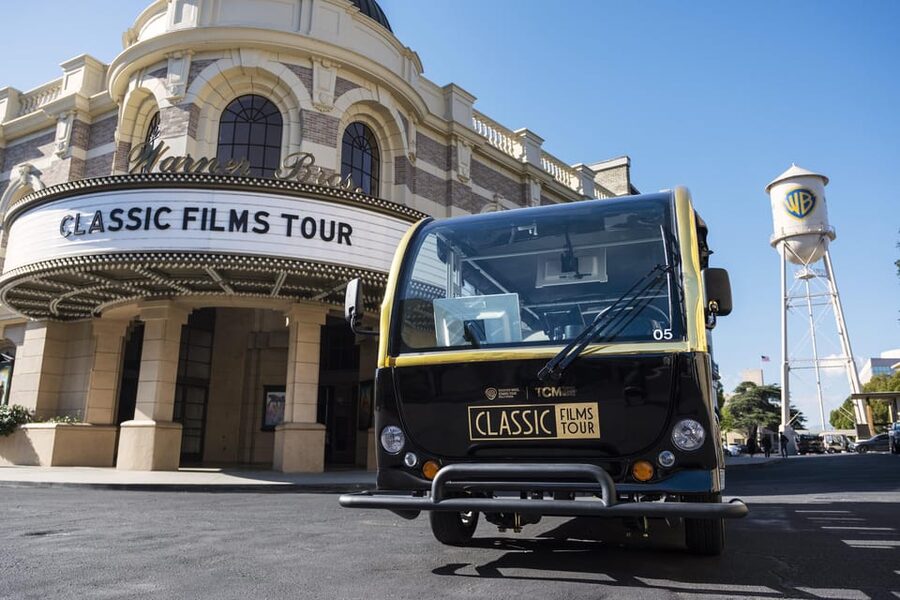
The most unusual part of this Warner Bros. tour is its focus on the working machinery behind classic Hollywood. You see James Dean’s apartment exterior, a former studio tennis court now turned rose garden, and a prop warehouse filled with pieces from films and television.
I like the TCM connection, which gives the visit a clear film focus instead of making it only a general studio tour. I also like the chance to enter the Eastwood Scoring Stage and see the Property House, two places that reveal how much work happens behind the scenes.
The main caution is simple: if you are hoping to walk through several active sound stages, this may feel limited. One recent booking rated the experience highly overall but specifically wished there had been a chance to see sound stages.
Key points to know before you book
- James Dean’s apartment exterior gives you a rare link to the actor’s short working life at Warner Bros.
- Jack Warner’s former tennis court is now a peaceful rose garden surrounded by talent dressing rooms.
- The Eastwood Scoring Stage dates to 1929 and has been used for countless film scores.
- The Property House holds more than half a million television and movie props.
- Iconic objects include the pirate chair from Captain Blood and Tiffany’s chandelier from The Letter.
- The visit lasts 210 minutes, with about 1.5 hours guided and about 2 hours self-guided.
What this TCM-focused studio visit actually offers

At $99 per person, this is not a quick photo stop. You are paying for three and a half hours on the Warner Bros. lot, with a mix of guided touring and time to explore at your own pace.
The TCM angle matters. Instead of treating the studio only as a modern production site, the experience points you toward films and people connected with Warner Bros.’ classic movie library. That makes the tour a better fit for you if you enjoy old Hollywood, actors, costumes, props, and the practical work that turns a script into a finished film.
The visit begins at 3400 Warner Blvd. The guided portion lasts about 90 minutes, followed by roughly two hours of self-guided touring in Burbank. You return to the same address at the end, so the experience is easy to understand from a timing point of view.
The tour is conducted in English. No guide’s name is provided in the booking information, so you should not expect to select a particular host. The current rating is 4.7 from seven ratings, which suggests a strong response, though the small number means you should treat that score as a useful signal rather than a guarantee.
Other Los Angeles days people book alongside this one:
- Full-Day Iconic Sights of LA, Hollywood, Beverly Hills, Beaches and More
★ 5.0 · 6,147 reviews - Warner Bros. Studio Tour Hollywood
★ 4.5 · 5,246 reviews - Hollywood, Beverly Hills & Celebrity Homes Tour by Open Air Bus
★ 5.0 · 2,557 reviews
James Dean’s apartment and the personal side of Hollywood
The exterior of James Dean’s apartment is one of the most appealing stops for film fans. Dean lived there while working at Warner Bros., so this is not just a generic studio building with a famous name attached to it. It connects a physical place with a particular moment in the actor’s career.
You will not be touring the inside of his apartment. The attraction is the exterior and the story attached to it. That distinction matters, especially if you prefer locations that retain a visible link to the people who worked there rather than recreated museum displays.
I like this stop because it adds a human scale to the tour. Film history can become a list of titles and dates. An apartment exterior reminds you that actors lived, worked, and waited for their next part in the same ordinary spaces that still make up a studio lot.
The stop should appeal most to fans of James Dean and classic Hollywood personalities. If your interests are limited to seeing full sets or active production areas, it may feel less substantial. Its value comes from context, not from a dramatic interior reveal.
The rose garden that replaced Jack Warner’s tennis court
The rose garden offers a quieter change of pace. In the studio’s early years, this area served as Jack Warner’s tennis court. Today, it is a peaceful garden surrounded by talent dressing rooms.
That transformation tells you something about how studio lots change over time. The same grounds can serve private executive use, actor facilities, and visitor access in different eras. You get a small glimpse of the social structure of the classic studio system without needing a long lecture.
This should be one of the more relaxing stops. The garden gives you a chance to slow down after the guided portion and take in the setting. It also helps break up the more technical parts of the visit, such as the scoring stage and prop storage.
Photography is limited, so do not plan on documenting every corner. You should also keep your expectations measured. This is a garden stop with historical context, not a formal botanical attraction or a major film set.
The Eastwood Scoring Stage, built in 1929

The Eastwood Scoring Stage is one of the strongest features for anyone curious about film music. Built in 1929, it has been used to score countless titles, linking the physical room to the soundtracks that shape how movies feel.
Many studio tours focus on what appears in front of the camera. A scoring stage shows you another part of the process. Music can build tension, signal romance, create fear, or make a final scene feel larger. Seeing the place where that work happens adds useful depth to your understanding of film production.
The name can cause a little confusion. The stage is called the Eastwood Scoring Stage, but the information provided does not say that Clint Eastwood worked there or that he will appear during the tour. Treat the name as the title of the facility, not as a promise of a celebrity connection.
Access to this stage is included in the price. That is important when judging value, since the tour is not only a drive or walk past studio buildings. You get a designated stop tied to the sound side of filmmaking.
Still, the Eastwood Scoring Stage does not replace a full sound-stage visit. If your top priority is seeing where current productions are filmed, you may come away wanting more. The single specific criticism available about the experience was a wish to see sound stages, so this is the clearest point to consider before booking.
A different kind of day out around Los Angeles:
- Hollywood Sign 2.5-Hour Tour with Comedians and Their Dogs
★ 5.0 · 2,496 reviews - Full-Day LA Tour: Santa Monica, Hollywood and Beverly Hills
★ 5.0 · 2,431 reviews - Hollywood and Celebrity Homes Bus Tour
★ 4.5 · 2,074 reviews - Los Angeles: Hop-On Hop-Off Bus Tour with Audio Guide
★ 3.7 · 2,030 reviews
The Property House and half a million pieces of film history
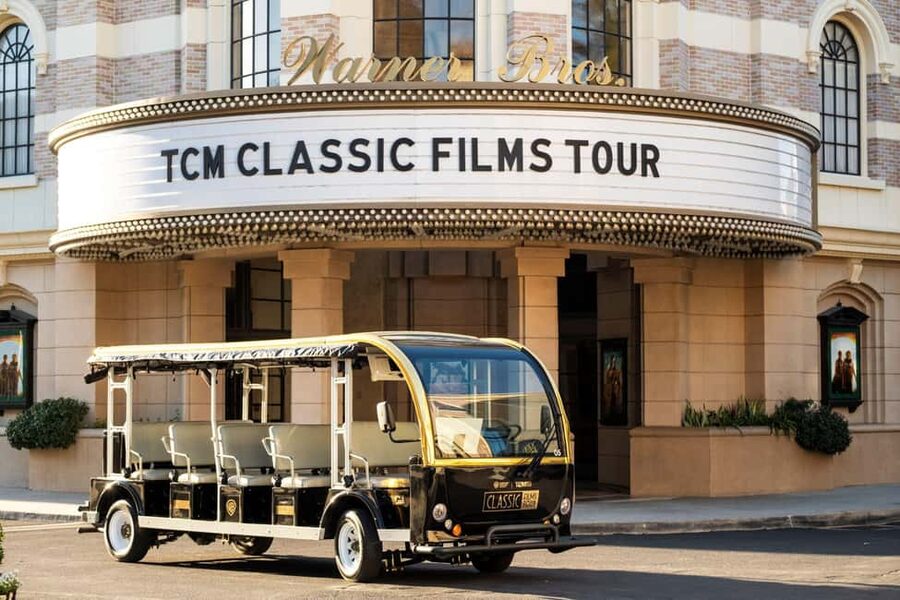
The Property House is likely to be the most surprising stop for many people. It houses more than half a million television and movie props, making it far more than a small room of famous souvenirs.
Props are the objects that make a fictional world believable. A chair, lamp, sign, serving dish, or chandelier can tell you where a scene takes place and what kind of person lives there. A large prop collection also shows how studios reuse, store, and preserve the physical parts of productions.
Several named objects give this stop extra appeal. You may see the pirate chair from Captain Blood, a film associated with the classic adventure tradition, along with Tiffany’s chandelier from The Letter. The chandelier is described as breathtaking, and it offers the sort of visual detail that can make the collection memorable even if you have not seen every film represented.
The Property House is valuable because it makes movie history tangible. You are not simply hearing about a set or costume. You are looking at objects that helped create the finished image on screen.
The collection is large, but the exact route and number of objects you see are not specified. Do not assume you will inspect all half a million items. The figure describes the size of the holdings, not the amount on display during your visit.
Why the guided and self-guided portions matter
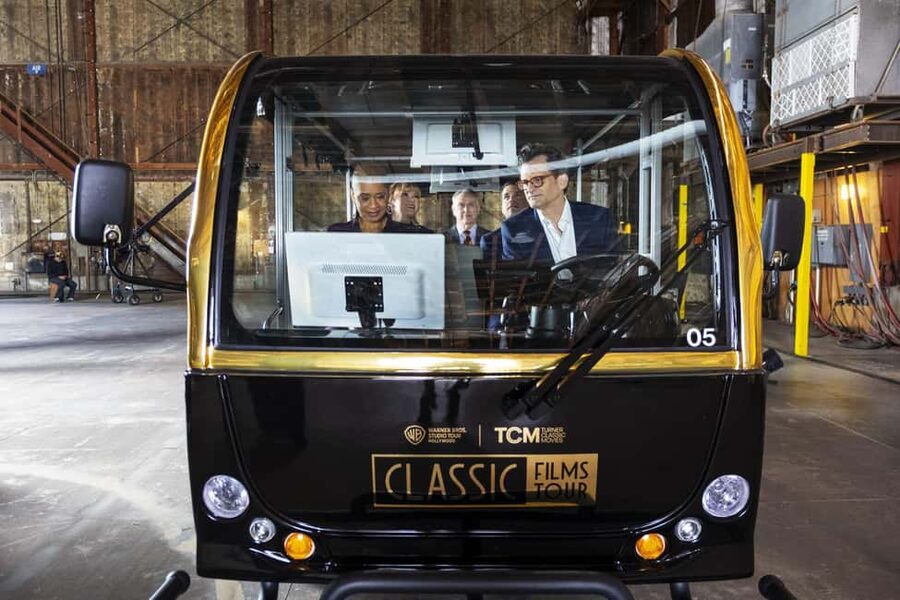
The structure gives you two different ways to experience the lot. During the 1.5-hour guided section, an English-speaking guide provides direction and context. This is useful at a working studio, where the significance of a building or location may not be obvious from the outside.
The following two-hour self-guided portion gives you more control. You can spend extra time with the exhibits and movie-related material that interest you most. If you care about props more than gardens, you can give the Property House closer attention. If classic actors are your priority, the James Dean stop may be the part you remember best.
There is a tradeoff. A self-guided section depends more on your own pace and interest. It may not provide the same level of continuous explanation as the guided portion. I would view the split as a benefit if you dislike being hurried, but a possible weakness if you want a guide talking throughout the entire three and a half hours.
The total duration is 210 minutes, so plan for a substantial visit rather than something you can fit into a short gap between other Burbank plans. Meals and drinks are not included. Bring your own plan for food before or after, but do not count on the tour price covering refreshments.
What the $99 price means in practical terms

At $99, the tour sits in the paid studio-visit category rather than the casual sightseeing category. The value depends heavily on what you want to see.
For a TCM fan, the price includes a guided Warner Bros. Studio visit, access to the Eastwood Scoring Stage, the Property House, and viewing of classic movie props and costumes. The James Dean connection and the former Jack Warner tennis court add places with a specific story, not just broad references to Hollywood.
I think the cost is easier to justify if you appreciate the construction of movies. You are paying for access to production-related spaces and objects, not a celebrity appearance or a guaranteed look at an active shoot. The Property House alone gives the tour a distinct angle, since it focuses on the physical objects used to build scenes.
The value is less clear if you mainly want sound stages. The available information does not promise access to them, and one booking specifically wished for that addition. Before you pay, ask yourself which matters more: classic film objects and studio history, or the chance to see current production spaces.
The tour includes wheelchair access, which is useful for visitors who need an accessible experience. Personal expenses, transportation to the studio, food, and drinks are not included. Parking is available at 3400 Warner Blvd. for a fee, so add that cost if you plan to drive.
Timing, entry rules, and what to bring
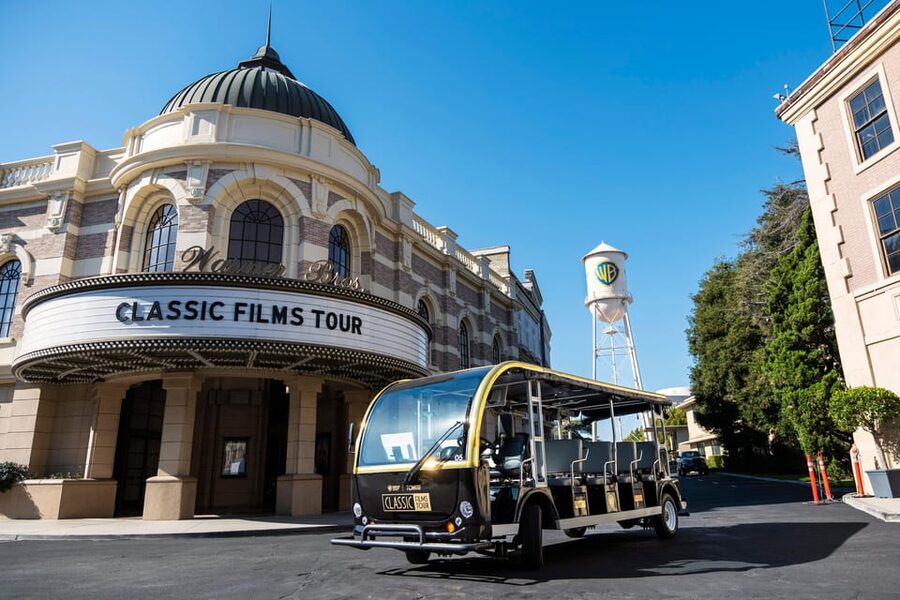
Your mobile voucher serves as the ticket for entry, so you do not need to line up to exchange it for another ticket. You should still allow enough time to reach 3400 Warner Blvd. and get through the entrance process.
Adults must present a valid government-issued ID, either a driver’s license or passport. The instructions also say to bring a passport or ID card and a driver’s license, so the safest approach is to carry one valid government-issued photo ID that meets the entry requirement.
Personal belongings may be searched. Pack lightly and avoid bringing anything you do not need for the tour. Video recording is not permitted, and photography is limited, so be ready to follow the studio’s rules rather than treating the visit like an unrestricted photo walk.
The tour is not suitable for children under five. That rule, combined with the three-and-a-half-hour duration, makes the experience a better match for older children, teenagers, and adults who can stay engaged with film history and behind-the-scenes details.
Free cancellation is available up to 24 hours before the start time. You can also reserve now and pay later, which helps if your Burbank schedule is still shifting.
Who should book this Warner Bros. experience
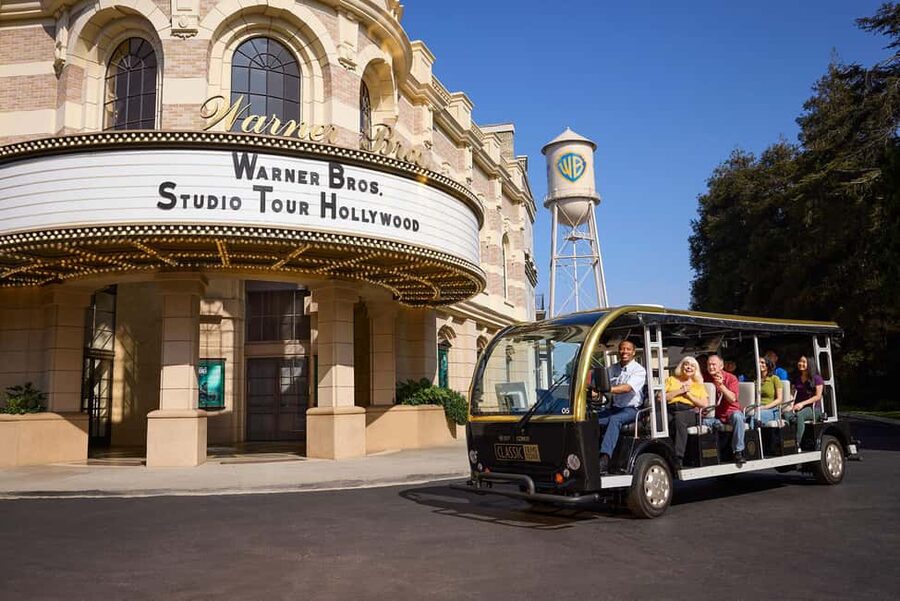
I would choose this tour if you enjoy TCM programming, classic actors, old Hollywood studios, film costumes, or the physical objects used in famous productions. It is especially good for someone who wants more than a general studio overview and likes specific stories, such as where James Dean lived or how a former tennis court became a rose garden.
It also suits you if you like seeing how films are made away from the camera. The scoring stage and Property House provide the strongest behind-the-scenes material, while the costumes and props give the classic-film focus something concrete to show you.
I would hesitate if your main goal is a tour of working sound stages. The experience does not promise that access. It may also disappoint children under five, who cannot take part, and anyone looking for an informal visit with unrestricted photography.
The self-guided portion makes it a reasonable choice for visitors who want some freedom after the guided tour. You can shape the latter part around your own interests instead of spending the entire visit in one fixed group.
Should you book the TCM Classic Films Tour?
Book it if you want a focused look at the people, places, music, props, and costumes behind Warner Bros. classic films. The Property House, James Dean’s apartment exterior, and the 1929 scoring stage give the tour a clear identity that goes beyond a standard studio walk.
Skip it if active sound stages are essential to your plans. For everyone else, $99 is a fair price for 210 minutes of guided and self-guided access, especially when the visit’s classic-film details matter more to you than seeing a current production in progress.
FAQ
Where does the TCM Classic Films Tour begin and end?
The tour begins and ends at 3400 Warner Blvd. in Burbank, California.
How long does the experience last?
The experience lasts 210 minutes, or three and a half hours. About 1.5 hours are guided, followed by about two hours of self-guided touring.
What language is the tour offered in?
The live tour guide conducts the experience in English.
What identification do adults need?
Adults must present a valid government-issued ID, such as a driver’s license or passport, to enter the studio.
Is photography or video recording allowed?
Photography is limited, and video recording is not permitted. Personal belongings may also be subject to a search.
Is the studio tour wheelchair accessible?
Yes. The experience is listed as wheelchair accessible.
Just added around Los Angeles
- Photo Tour of Los Angeles for Social Media★ 5.0 · 11 reviews
- Pacific Coast Highway: Smartphone Audio Tour, LA to Santa Maria★ 4.0 · 13 reviews
- Pasadena Puzzle Adventure: Stop the Bomb!★ 3.5 · 5 reviews
- Outdoor Escape Room in LA – Little Tokyo★ 5.0 · 7 reviews
- 3.5-Hour LA Story Tour: Our Most Popular Los Angeles Tour!★ 5.0 · 4 reviews
- 2 Day Beginner Surf Adventure★ 5.0 · 26 reviews
- Venice and Santa Monica French Bicycle Tour★ 5.0 · 13 reviews
- Getty Center Tours for KIDS and FAMILIES!★ 5.0 · 5 reviews
Tours, compared.

Hollywood, Beverly Hills & Celebrity Homes Tour by Open Air Bus
Read our review →
Hollywood Sign 2.5-Hour Tour with Comedians and Their Dogs
Read our review →
Full-Day LA Tour: Santa Monica, Hollywood and Beverly Hills
Read our review →

Half Day Best of Los Angeles Guided City Tour
Read our review →